Showing posts with label Graham McNeill. Show all posts

Sunday, 20 March 2016

"The Outcast Dead" by Graham McNeill

From the fairly limited time I spent on forums discussing (or yelling about) Horus Heresy books, I got the impression that much of the fandom considers ‘The Outcast Dead’ to be the point where the HH series took a nosedive in quality (well, either that or ‘Nemesis’). In fact, I think I only ever saw it brought up as an example of how Graham McNeill can’t plot worth shit and knows nothing about the setting, due to a fairly large/problematic plot contrivance we’ll get to later.

I actually like this book a lot – big surprise, right? So I wrote a long ass review, maybe even rivaling my 'Fulgrim' writeup. Apologies in advance for how long and rambling it ended up...

Sadly, the sick-ass 80s goggles worn by purple boy are not canonical to the book...

Before reading this book, you need a passing knowledge of the Crusade Host, because that won’t be explained too promptly or clearly in the novel. Lemme give you the Cliff notes. Essentially, each Legion left between one and three warriors on Terra, really just to act as a symbolic guardian or ambassador on the Homeworld. (The Ultramarines left five – always gotta be the best, don’t they?) These warriors were referred to as the Crusade Host. At the outbreak of the Heresy, the host numbers thirty warriors. Obviously, some of the Legions represented here have since turned traitor – but these warriors have been on Terra fifty years, so they’re unlikely to be part of the secret Lodge-fostered revolutionary plot, right? Unfortunately, Dorn, Malcador et al are not really the type to give a down-on-his-luck Astartes the benefit of the doubt. Y’all just can’t let the Space Marine man thrive! In a not-exactly-clear sequence, the Crusade Host are betrayed by one of their own number, a Thousand Sons marine who helps the Imperium's agents to capture and imprison them (though not without a fight).

John French’s ‘Riven’ and Anthony Reynolds’ ‘The Purge’ tell the stories of the X Legion and XVIII Legion Crusade Host warriors, respectively, and for the curious you can find the exact rundown of which Legion left which amount of warriors and what their names were (it was ‘bonus material’ in the limited edition of ‘The Purge’). For ‘The Outcast Dead’, though, we’ll only be meeting a small amount of the Crusade Host.
But that all comes later.

First of all, we have to set up our storyline and lead characters, some of which are established pretty quickly. First, we have disgraced astropath Kai Zulane, recently involved in a huge catastrophe which resulted in the loss of the XIII Legion vessel Argo, leaving him with PTSSD (post traumatic space-stress disorder) (yep, I guess that’s the quality of joke I’m making now). The other central character – kind of – is Yasu Nagasena, who we meet while he’s preparing to storm a fortress housing the Crusade Host, at the head of an army of three thousand human troopers. I say ‘kind of’ because he barely features in the beginning of the book. We also have a supplicant in the Petitioner’s City called Roxanne, who seems important at the beginning but is missing for most of the middle of the narrative. Yep. Graham’s naming convention continues to take the occasional wobble (Snowdog, anyone?) but she’s a pretty damn good character. I might even say she’s the best female character Graham’s written in the Heresy series. (Not that there’s much competition in his lineup of whores and matriarchs.) She’s like a much less irritating version of Dalia from ‘Mechanicum’.

Kai Zulane is bound to be divisive. He whines, he complains, he throws tantrums, he cries, he never asked to be born, and it’s good to know that if he ever needs attention all he has to do is die. For all intents and purposes, he’s a sullen teenager who hasn’t been allowed to stay out all night. Graham has created a truly obnoxious character – but Zulane is supposed to be obnoxious. I would rather read about Zulane and his selfish crying than the boring Remembrancers Graham wrote for his earlier books – and I find Zulane’s dialogue and motivations to be pretty believable, instead of the weird colourless mind of, say, his Sindermann (articulate if didactic intellectual when written by Dan, charisma-free dullard when written by Graham).

Nagasena is a little more problematic. Sure – Graham put this guy in there because he loves samurai, and why not? Who doesn’t? And what is 40K if you can’t just shove an archetype from a totally archaic culture in amongst all the spaceships and laser cannons? But the deployment of age-old Japanese warrior tropes is clumsy at best, kind of a lazy ethnic stereotype at worst (Nagasena loves gardening and painting, because, well, Japan, right?). When Chris Wraight had to justify why a technologically advanced Imperium in the 31st Millennium would employ a Legion of Mongolian warriors who were not a million miles from the host of a 2nd Millennium leader, he gave it his best shot (and I think he was successful). Compared to, say, Shiban in ‘Scars’, Nagasena is a blatant caricature. It's a shame, because his story arc is generally pretty damn interesting.

To begin with, our heroes are all on different parts of Terra, but news of the disaster at Isstvan V is starting to seep back to the Homeworld, and all the main characters are witness to the creeping dread and denial of an Imperium starting to realise just how fucked it is. And there’s a lot of fun in seeing Kai (ostensibly the major character of the book’s beginning) struggle through the ‘cold war’ political climate of Terra, just trying to get by, but getting caught up in events of galactic import (of course). It’s a little light on action, though. Then, just under halfway through, the representatives of Traitor Legions in the Crusade Host stage a daring escape from their super-super-hyper-max prison, Kai is caught up in the madness, and the action kicks into overload.

Hey, boy: ‘The Outcast Dead’ really fucking moves. Even in its opening chapters, where the game pieces are being set up on the board but there’s not much of what you’d call ‘action’, I’m engaged and entertained. When I consider how boring I’ve found quite a few ‘classics’ by Graham – ‘False Gods’, ‘A Thousand Sons’, the 40K Ultramarines books he wrote – I’m sometimes surprised how many of his books I think are paced superbly; this, ‘Iron Warrior’, ‘The Seventh Serpent’ and ‘Angel Exterminatus’ all spring to mind.

Our ‘second lead antagonist’, Babu Dhakal, is an out-and-out villain if Nagasena is a reluctant anti-hero. I like the idea that even at the centre of ‘the greatest galactic civilisation’ truly evil, dangerous bastards are allowed to thrive – and, well, it makes sense considering the Emperor is the boss here (evil maybe, dangerous certainly, bastard without question). But… the more we find out about Babu and his henchman Ghota, the more I think he has a legitimate grievance, even if the things he does to settle the score are pretty unjustified. I honestly hope we see more of this storyline, and with both characters alive and well and their grudge against the Emperor intact at the end of the book, it seems far from impossible they’ll show up to twist the knife again during the Siege of Terra.

What I really love about ‘The Outcast Dead’ is the glimpse it gives us of Terra as its pre-Heresy (and at times, pre-Crusade) culture struggles to adapt to the new system. Disillusionment with Unity is now allowed to come to the surface now that the Emperor and his goons have other things to worry about. With the growing paranoia caused by the Heresy, and the fragile state-enforced ‘materialist/atheist’ philosophy coming apart as the Imperial Cult continues to grow, it’s a rich seam to mine, and Graham sure mines it. Continuing my suspicion that Graham is at his best when riffing on Dan Abnett’s ideas, it feels like he re-read ‘The Lightning Tower’ and ‘Blood Games’ and was impressed by Dan’s not-actually-that-grimdark spin on a world caught between hard SF and 40K mysticism, and decided to use that as a foundation for the book. And it really worked. I think that apart from some of the Forge World background, this is the best Terra-set stuff in the Heresy.

I’m making ‘TOD’ sound like it’s some chin-stroking, lore-deep slow-burner going for a ‘literary sci-fi’ spin on the Heresy. It’s really not like that – it’s an action-packed ‘popcorn’ book. The situation here – a small group of disparate personalities with trust issues have to work together when the whole world’s against them – seems an obvious throwback to the violent yet cheesy 80s action movies Graham seems to love so dearly. In fact, the second half of ‘The Outast Dead’ seems like a vaguely Warhammerfied adaptation of some lost 80s blockbuster. I can see the lineup now: Chuck Norris as mystical Atharva (fuck it, it’s the 80s, so give him an incredibly tasteless ‘Native American’ headband), Arnold Schwarzenegger as brooding Severian, Sylvester Stallone as tough guy Tagore, Jean-Claude Van Damme and Dolph Lundgren as twin World Eaters Subha and Asubha, Patrick Swayze as pretty-boy Kiron, a quick cameo from David Hasselhoff as Gythua… and Charlie Sheen (or maybe a young Leonardo DiCaprio) as Kai Zulane. You could even pull in golden-boy everyman Hulk Hogan to play Rogal Dorn. Fuck, now I want to see that movie.

the outsiders dead lol

The thing is, while they’re nowhere near as shallow as in ‘Battle for the Abyss’, the characters here rarely move beyond Legion tropes. You’ve got an arrogant perfectionist Emperor’s Children marksman, a hulking, stoic Death Guard ‘big guy’, a smug yet conflicted Thousand Son psyker, an abrasive and prideful Luna Wolf scout. And of course, the World Eaters are angry berserkers thirsty for blood. However, it’s nice that some efforts are made to subvert the Legion characteristics. The gradually mounting tension between the three World Eaters is nice, an unexpected trait I’d like to have seen built on further. Having the Emperor’s Children and Death Guard warriors’ only real character traits being their strong friendship is kind of great. It’s a fun group of personalities bouncing off each other. I’d even argue that the ‘Legion trope squad’ dynamics here work better than in a later Graham book, ‘Vengeful Spirit’.

Of course, there is one character who I’d say eventually transcends the bold comic-book outlines of the rest of the titular Outcast Dead – and that’s Atharva, the Thousand Sons warrior. His role is so prominent that he has to be viewed as a main character, unlike most of the other Astartes tough guys here. Much like Mhotep in ‘Battle for the Abyss’, Atharva is an extremely powerful mage, to the point that the accusation could be made that he’s a broken character who can do whatever the author wants because magic. While he’s an Athenaean, he also seems to have a good grasp of most other Thousand Sons disciplines when it suits the narrative, and there also seems to be precious little limit to what he can achieve. While flawed, he also has a quick wit and powerful insight so frequently lacking in Ahriman and friends. Perhaps it’s my bitterness over how well-regarded ‘A Thousand Sons’ is as a book, since I always felt it was fairly mediocre, but I really believe Atharva is the best XV Legion character Graham has written. And hey, he’s part of one of the best ‘what the fuck?!’ moments in the book, when he voluntarily cuts off his psychic ability permanently to stop himself from being affected by a pariah. Weird, very weird - and I'm sure it's not a canonical 'possibility' in 40K lore, but who cares? It’s a kind of rad moment.

So what are the problems with ‘The Outcast Dead’? The slow-burn drama of the book’s first half is something I can understand fans disliking; generally HH readers seem to want their books to be a bit more visceral and action-packed than this. I think it’s an invaluable study of Terra in the early years of the Heresy – but I recognise not everyone agrees. It’s when the Crusade Host jailbreak occurs that Graham really gets to the meat – and that meat is pretty damn rare, with the escape sequence itself being some of his best tense combat writing, even though its resolution is somewhat fuzzy.

Another sticking point for a lot of fans is the way ‘The Outcast Dead’ deals with Magnus’ projection to Terra. At the book’s outset, we are in the prelude to Isstvan V (possibly the Massacre has already happened, considering that unreliable lines of astropathic communication are kind of a cornerstone of the narrative). Yet people are talking about how there hasn’t been any word from Prospero for months – but Magnus’ message to Terra was dispatched following his inability to sway Horus on Davin, which was, what, two full years before Isstvan V? Prospero surely was turned into a cinder more than a few months ago. And then – as news reaches Terra of four more Legions’ betrayal – a terrible psychic shockwave blasts the planet, emerging from the Palace, caused by the psychic ‘visit’ to Terra of the Crimson King – something that happened before the Heresy really got underway, but here presented as a present event (even going so far as to intercut Kai’s story with a scene featuring Magnus and Ahriman doing spell prep for the projection, and a scene with the Emperor seeing the g-g-g-g-g-ghostly visitation).

Now, in ‘Wolf Hunt’, Graham’s audio drama sequel to ‘The Outcast Dead’, this apparent timeline snafu is ‘clarified’ with exposition from Malcador himself: of course the Emperor received the message from Magnus before Isstvan III, but that projection caused a terrible calamity with the Webway portal the Emperor was working on, so he needed to nearly-single handedly hold back the ‘shockwave’ for nearly two years before, whoops, some fucker told him a really funny joke and he lost his grip and BLAM, Terra becomes shockwave city. This is also reinforced in ‘The Sigillite’, where it’s implied the Emperor has been fighting to control the Webway portal fallout caused by Magnus for a very long time.

Yet, if this were really the case, and it was the plan for the Imperial leadership to stifle the Webway disaster’s truth all along, it could have been dealt with MUCH more clearly. It really doesn’t seem to add up – sure the psychic shockwave is devastating, but you could argue that having the incredibly significant figurehead of the Emperor absent for so long has caused greater problems. I mean… come on Graham. You can treat us like idiots sometimes, just not all the time. Have some scenes where people belabour the point that the Emperor has been absent too long and with no explanation. Have Malcador drop some dark hints. Have Dorn, or maybe THE EMPEROR HIMSELF – who makes a cameo here, in ‘psychic apparition’ form – allude to this terrible tragedy. Instead, in the words of one powerful psyker, “It’s happening now! It’s happening right now!” 

There are also just too many scenes where people talk about ominous predictions and foretellings regarding SOMETHING THAT ACTUALLY FUCKING HAPPENED TWO YEARS AGO. Why weren’t those Magnus scenes framed as flashbacks? It would only make sense if the big shocking payoff was ‘Surprise, it actually happened years ago!’… but ‘it actually happened years ago’ was a WELL ESTABLISHED ELEMENT THAT EVERYONE ALREADY KNEW FROM THE ORIGINAL TIMELINE!
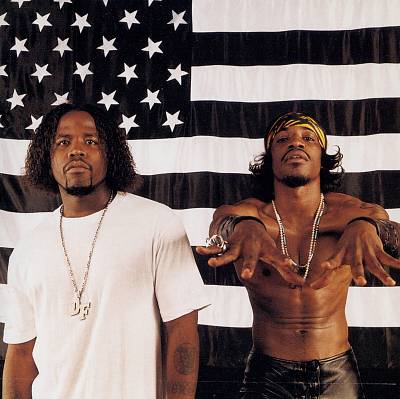
the outKast dead lol
On my third reading of this book, it feels like Graham either forgot how the timeline went (which is what the message board assbutts would have you believe) or he’s trying to allude to these rather strange changes to the ‘original’ timeline in a very subtle, coquettish way. And frankly – don’t take this as a criticism, because as I’ve said, I love this book – Graham doesn’t do subtlety. At best, this is sloppily written; at worst, the internet assholes were right for once. It feels like something a halfway competent editorial team could have picked up on right away. Maybe it’s unfair to say that; it’s rumoured Graham isn’t the most cooperative with the BL editors, so perhaps their hands were tied.

With all that said, I DON’T CARE THAT MUCH ABOUT THIS EVEN IF IT IS A MISTAKE. Sure, Graham possibly fucked up, and if he tried to clumsily do a stealth retcon and not own his mistake, that’s kind of shitty – but a) we can’t 100% prove that’s the case and b) does it totally ruin the book? I don’t think so at all. It’s background stuff; the real meat of the book is the development of Heresy-era Terra as a place, and the dumb action movie Dirty Dozen shit that works so well.

And what’s the last problem with this fairly great book? Well... it falls apart a little at the end. It seems Graham ends quite a lot of his books with a giant overblown fight scene where all the different plot lines tie up in a conflagration of violent fucking death. If the characters have been enjoyable to spend time with, I get quite invested in these fights – ie ‘Angel Exterminatus’. If I haven’t liked the characters, it just serves to underline how hollow the reading experience has been for me – see ‘Dead Sky Black Sun’ or ‘A Thousand Sons’. ‘The Outcast Dead’ is… kind of in the middle. ‘Big hero death’ moments for Gythua and Kiron seem like the prelude to a big, heartrending ‘kill everyone, let the reader suffer’ ending. And then we get a big hero death for Tagore. It’s brutal, pretty sad, and well handled – he’s a monstrous psychopath, but we’ve spent enough time with him that we’re kind of rooting for him. And then there’s a similar moment for Subha. And Asubha. And Saturnalia, kind of... By now it’s starting to feel like the same death is being repeated again and again in the hopes we have an equally powerful reaction each time. And then we get one for Atharva (well, in a way we get two). And Kai himself, of course. These moments are sometimes separated by only a few pages, and one after the other, they slowly start to lose their power.

And the messy wrap-up of the story that’s going on all around these deaths – that doesn’t help much. A daemon taking on the aspect of the Angel of Death manifests just because. I was aware of the foreshadowing leading up to this in the book, but the payoff seemed confused and utterly gratuitous, and amongst the fucking ocean of murder that’s happening around him, Palladis’ theoretically-maybe-a-bit-cathartic death loses any impact. Who was this character and why did he do the things he did? Graham helpfully has him die sobbing that he’ll finally be with his dead family again, and hopefully that means we won’t think about how one dimensional Palladis turned out to be. But why was the daemon there, and what was its aim? With Graham reducing his BL workload since he works for Riot Games now, it seems possible we’ll never see that storyline given a satisfying ending.

The last bloody payoff for Kai – realising his vision is in fact a foretelling of the Horus/Emperor duel – is a great moment. And Graham gets to write about one of the most important scenes in the 40K fiction – though this is a vision, so BL could still fuck around and change the way things play out when the books actually deal with this. I’m not sure how I feel about the Emperor knowing and apparently embracing his ‘death’ as an unchangeable inevitable fact at this point in the Heresy, since it doesn’t really sit comfortably with how I’ve come to view the Emperor – but I guess maybe we’ll see how ‘Master of Mankind’ deals with this.


He may neglect to service the fans in quite the way they want, but Graham is still giving us some great moments. TOD feels like Graham looked at ‘Blood Games’, ‘Battle for the Abyss’ and ‘Nemesis’, gauged exactly what was cool about them and what was a drag, and put the cool stuff together in one gloriously illogical package. It’s a heck of a read. Vital to the ‘macro-view’ of the Horus Heresy? Not at all; the key mainline plot points can be summarised in a paragraph. But it’s one of my ‘secret favourite’ Heresy books, and one I feel is wildly underrated. 8/10

New to PurpleHeresy? Head on over to the index page to see a more chronological list of the Horus Heresy reviews on this blog.

Thursday, 3 March 2016

Short Fiction Round-Up Volume 3: "Vorax" (Matt Farrer), "Luna Mendax" (Graham McNeill), "The Gates of Terra" (Nick Kyme)

Coming to you this time, three stories with a unifying theme: they all take place within the yellow light of Sol, though none are on Terra’s holy ground (well, as far as I know… jury’s out on the last one) after the outbreak of the Heresy. While this theme unifies them, the stories, characters and quality are all varied. I thought it’d be cool to do this themed roundup as the recent Weekender featured an announcement that the HH narrative will be moving definitively into the Solar System Campaign which leads into the Siege of Terra. Seems premature to me, but BL know what they’re doing… right??


Vorax by Matthew Farrer: Before ‘Cybernetica’ delivered on the promise of more, it seemed for a while like the Horus Heresy series had straight up forgot about Mars. (Nowadays everybody wanna talk, like they got somethin’ to say…) All these stories of Space Marines (mostly from the Shattered Legions) having desperate battles in the far corners of the galaxy when there was already a Traitor stronghold on Terra’s doorstep apparently going ignored. ‘Vorax’ was no more than a tidbit – an Advent Calendar Quick Read that in some ways serves only as a glorified advert for an expensive resin model made by Forge World. Yet somehow, it manages to be one of the best Heresy stories BL has put out in recent years. I’d compare it to Farrer’s seminal ‘After Desh’ea’ in the way it arouses my interest in a faction I’ve often found boring and one-note. I don’t wanna say that in its few pages, ‘Vorax’ is “better” than Graham’s whole ‘Mechanicum’ book was at showing scrapcode corruption and the madness that reigns after Mars declares for Kelbor-Hal… but… Well, I seem to already have said it, don’t I?

The story of ‘Vorax’ is rather basic and in fact can be summed up in a sentence. On the Ring of Iron, the Mechanicum traitor Ratiomancer Rhaal torments loyalist Enginseer Arrys, but is interrupted by some Vorax automata, who horribly murder him. The end. (Spoilers.) But like most of these Quick Reads, the story isn’t the appeal, it’s the way the authors can deepen and augment the background to this huge conflict. Farrer is one of the best in BL at showing us a new side to old, boring scenarios. Plus, homeboy can write – his flashy yet somehow terse style, florid in dialogue but brutal in combat, is one of my favourites after Dan Abnett. Here, he excels in showing the details of physical change wrought in Mechanicum operatives by the Mars scrapcode and their embrace of Kelbor-Hal’s new regime. Disturbing and horror-influenced, but somehow more believable than a lot of the more ‘gross’ stuff in HH. He also manages to tell us the current state of the Mars conflict and its blockade in subtle ways, making me wish for more of this from Farrer – a novella at least, or several more Quick Reads – to flesh out the Ring of Iron conflict. Still, I think any stories on this subject would be welcome, regardless of the writer – it really seems like a rich area that the series hasn’t mined yet.

In a short story like this characterisation often has to be done using broad strokes and clichés. Yet Farrer gives Rhaal a distinct and convincingly unhinged voice – it’s a very different approach from the dispassionate, brusque canting of Rob Sanders’ Dark Mechanicum creations. I’ve grown to enjoy Rob’s work in that area but this is still my preferred portrayal of Martian insanity and evil. Importantly, the Vorax themselves are a terrifying force of nature, and it’s a shame that as far as I know they haven’t shown up in any other Heresy work to date.
Sadly, the main problem with Vorax is that it’s so bloody short, and that its nasty, brutish ending makes it seem more like a prelude to a longer work than a self-contained narrative. I can only hope… but considering how infrequently Matt’s stories appear, it seems unlikely. For those who want more evil Mechanicum stuff from Matt, his novella ‘The Inheritor King’ from the Sabbat Crusade anthology also deals with corrupt machines, though in a very different way. For those who just want more Heresy stories from this guy, well, I’m right there with you. 9/10


Luna Mendax by Graham McNeill: At first published only in an event-exclusive anthology (which I was lucky enough to get my hands on), ‘Luna Mendax’ is an important chapter in the Garviel Loken story. Luckily, BL have finally put it out as an eBook, something they probably should have done in tandem with the release of ‘Vengeful Spirit’, since it’s an explicit prequel to that book. But oh well, since it’s out, it seems petty to complain.

‘Luna Mendax’ sees Graham McNeill take over as the writer for Loken for the first time since ‘False Gods’. Ben Counter may not have changed Garvi too much, but James Swallow made him fully insane and delusional, giving him the mantle of ‘Cerberus’ for his rather unsurprising return from the grave in ‘Garro: Legion of One’. Then John French took Loken on with ‘Grey Angel’, writing his shattered confidence well but involving him in a rather strange Caliban-centred plot hole which may or may not ever get a satisfying resolution.

When we meet Loken he’s working to build a beautiful garden, in a deserted hab-dome on Luna. Yeah, it’s a bit of a cliché for an old warrior to be working in a garden and musing on the nature of peace, an easy shorthand for the fact Loken is tired of war and wants to, well, retire. But after that slightly annoying intro, ‘Luna Mendax’ becomes a nice curiosity, an enjoyable HH story for those who don’t insist on their BL material brimming with violence, ichor and innards. Not only does it fill in the gaps between ‘Grey Angel’ and ‘Vengeful Spirit’, it also fills in the gaps after ‘Legion of One’, and that’s appreciated. The mission to Caliban in ‘Grey Angel’ is discussed at length, but the wilfully obscure nature of Loken’s findings are passed over, which is probably a smart decision. Graham also dials back the mad frothing of the ‘Cerberus’ insanity to show a more realistic portrayal of a warrior recovering from a deeply traumatic event which left pretty much everyone he had ever known either dead or his sworn enemy.

Loken’s memories are a mess, which gives Graham an opportunity for several flashbacks. These emphasise one of the things I like most about Graham’s writing: he really loves ‘Horus Rising’ and is unashamed of showing it. This writing showed a marked improvement in characters established in that first novel. It also gives Graham a chance to press ‘reset’ on the character of Loken and have him revert to his pre-Isstvan III self as his memories come flooding back. No more screaming insaniac, no more borderline-catatonic PTSD victim. 

Perhaps that’s a little disingenuous, throwing away other authors’ work on this central character, but I think it worked well to have the ‘old’ Loken back for ‘Vengeful Spirit’. And, yeah, it helps that I like Loken a lot. While Garro has reacted to the upheaval of the Heresy with explorations of religion and worship of the Emperor, Loken seems to be walking a more difficult path with less certainty in the answers, and that’s part of what makes him the ‘Grey Knight’ I like most (well, after Varren).

Lastly, it also sets up one of the weirder arcs in ‘Vengeful Spirit’, if I recall right – Torgaddon’s soul is devoured or trapped by a daemon, which ends up inhabiting Grael Noctua’s body, and I guess this is him asking Loken for help? Man, I hope that once gets as crazy a payoff as the setup seems to promise.

If there’s any complain I can level at ‘Luna Mendax’ – apart from the kind of lame opening – is that I would certainly have appreciated more of an insight into how Loken sees Malcador and Garro. It’s odd how Garro and Loken weirdly never seem to be in the same place at the same time since the Heresy started (not while Loken’s sane, anyway). These two squaring off, or maybe just fighting back to back, is something I’m really looking forward to.

My favourite Heresy stories are often the ones which have little in the way of combat, focusing instead on exploration of characters. I’d take this moving, elegant story over the similarly structured – but in my opinion, hugely overrated – ‘Last Church’ any day. 8/10


The Gates of Terra by Nick Kyme: The last of our three Sol system stories begins strong with a Malcador/Dorn discussion that, well, doesn’t suck. Very mysterious; they’re discussing the inevitability of Horus reaching the walls, the Edict of Nikea, and the importance of using every weapon available to them, even ones they must keep from the Emperor himself. Impressive, eh? As it starts to get interesting, the narrative shifts to… Arcadese. Remember him? The Ultramarine from ‘Forgotten Sons’. As a heavily augmented wounded veteran, dealing with feelings of obsolescence and a creeping suspicion his Legion have abandoned him, I found Arcadese a fairly interesting character. We last saw him leaving the dying planet Bastion after the failure of his diplomatic mission there, swearing to avenge his friend Heka’tan of the Salamanders, and to kill as many Traitors as he could before death claimed him. So what’s he up to now?

Battling a strange, indefinable feeling of wrongness – as if recovering from a head wound – Arcadese finds himself in a besieged fortress helping to hold off the full vanguard of Horus’ armada, including the grim monolith of the Vengeful Spirit. To make matters worse, in the sky Arcadese can see… Terra. That’s right, the war has come to the heart of the Imperium already. Arcadese is on an orbital station in the Ardent Reef, and he must hold as many of these ships off as he can. The situation is hella grim and with World Eater drop-troops and their daemon allies right at the fortress door, the Ultramarine must prepare to make the ultimate sacrifice, knowing it will never be enough to stop Horus.

BUT WAIT. As Arcadese dies, it’s revealed the whole thing was a simulation, psychically implanted by Librarians working at the behest of Malcador and Dorn (hence the conversation in the beginning). The Siege isn’t happening yet, dummy! The war is definitely a little further along here than we’ve gotten in the main novels’ ‘timeline’, since the Warmaster’s attack is considered to be imminent and the Imperium has knowledge that daemonic opponents will most likely be faced.

Honestly, I sort of love this weird twist ending, though the justification for it is flimsy at best. The ridiculousness of using this kind of intensive training rather than traditional simulation runs is handwaved away (in fact Malcador literally says there’s “no time” for that discussion). It hardly seems the most efficient way for the Astartes of Terra to prepare. And putting it into practice for such a relatively small group of Marines, especially one including a warrior of dubious effectiveness and stability like Arcadese? I’d like to have a few of these plot holes filled in, but there are aspects to ‘Gates of Terra’ which make me think it’s a really cool idea. Maybe this ‘battle-conditioning’ will just be used for the leaders of the forces who will be sacrificed at the various ‘waypoints’ before Terra can be reached… or, maybe we’ll never fucking hear about it again, like so many cool ideas floated in short stories. (Remember when the World Eaters went to dig through the ruins of Prospero? Apparently BL wants to act like this never happened.)

Any Malcador story will give you a few juicy morsels of information about the future of his shadowy network of underlings, and this is no exception. Another of Malcador’s Astartes, the Librarian Umojen, could be another potential Grey Knight. Then again, it’s revealed here that there are hundreds of these loyal Astartes being run through the psyker-induced simulation runs, from many different Legions, and each of the ‘trainees’ are overseen by Librarians of diverse Legions as well. This puts Malcador’s pool of potential Grey Knights at levels so high that it seems pointless to even have a conversation about Grandmaster identities.

This was apparently first published in French as part of the French Games Day 2012 Chapbook and, well, at times it seems like there’s been some Babelfish use here in preparing the English version. One character is referred to as ‘Lieutenant’ throughout and I’m not sure if this is because Arcadese admits to not knowing the character’s name – though he feels he should – or if it’s just been translated BACK into English from French and some weird shit has gone on with the phrasing. “Lieutenant had vanished from sight in the hellstorm” surely would read better as “The lieutenant (or ‘The nameless lieutenant’, or ‘The mysterious lieutenant’) had vanished from sight in the hellstorm.” This shit does make a difference, people, and since Nick Kyme also works for Black Library as an editor, you’d expect it to be picked up. Likewise, some of the sentences seem very terse, even to the point that words seem to be missing, and again, I’m not sure if this is intended to show Arcadese’s brusque manner or just a fuckup in translation. And sometimes words are there which shouldn’t be: ie the “cracked view-screen screen” mentioned in passing.

On my first readthrough, I felt pretty enraged that the Siege of Terra, even the prelude to it, was being introduced in such an off-hand way, in a fairly mediocre story. I went into my second reading of the story knowing that the apparent Siege was really a red herring, which made it easier to swallow, though it doesn’t get any less bland. There are some moments of ‘pretty okay’, maybe even ‘great’ void combat here, but Kyme’s characterisation of Arcadese here doesn’t really add anything new to an UItramarine I’d actually found pretty interesting previously. Add to that the fact that most of the combat sequences had me close to yawning – well, I’m far from proclaiming this a classic. However, I really like the direction hinted at in the ending, and while I’m not particularly bothered with finding out what happens to Arcadese specifically, I do want to know where this particular storyline goes. And as a “Fuck what you just read, it was all a simulation” moment, I’d take this over ‘Rules of Engagement’ for sure. 6/10

So there you go. Three stories about the Sol system. I guess we'll be seeing stuff like this a lot more in the next few years as the Legions begin their march back to ‘where it all began’. We’ll see how that turns out.

New to PurpleHeresy? Head on over to the index page to see a more chronological list of the Horus Heresy reviews on this blog.

Monday, 4 January 2016

"The Reflection Crack'd" by Graham McNeill

Whaaat? I thought he had quit this blog!!

Whaat? He already reviewed that story!!

Yeah, I'm back. There were times in 2015 where I wanted to walk away from the HH series completely... just drop the mic and peace out. But things are starting to look up, if you believe BL's often-misleading marketing (credulous idiot that I am, I believe it every time). With 'Master of Mankind' and 'Descent of Angels' on the way, the interesting-looking 'Sotha' already out in eBook format, some potentially great anthologies announced, and a sequel to 'Scars' or even 'The Crimson King' not an impossibility before year's end, I'm 'back in' (though more cautiously than before).

Yeah, I'm hoping to finally write my 'Outcast Dead' review. I'm hoping to get a lot of audios and novellas reviewed that I haven't had the will to touch at all. But first... I've got some shit to get off my chest about the stories in 'The Primarchs'. Starting with Fulgrim and his boys.

Fierce.

For all the flaws I believe ‘Fulgrim’ has (vastly overlong, characters’ extreme stupidity seeming to serve nothing but the rolling forward of the plot, the exact nature of Fulgirm and the Legion’s corruption being poorly handled, terrible Remembrancer storyline), I really enjoyed the exploration of Lucius as a character. Dan Abnett might have ‘created’ this III Legion legend’s persona in the Horus Heresy era, but Graham McNeill is the one who mastered it. So it’s fortunate for me that ‘The Reflection Crack’d’ leans heavily on Lucius as our viewpoint.

Following the events of Isstvan V (‘Fulgrim’) and the subsequent revelation to Lorgar and the other traitor Primarchs that Fulgrim had been possessed by a daemon (‘Aurelian’), we pick up the III Legion lurking in space. In fact it begins where ‘Aurelian’ left off: in the wreckage of La Fenice. And who’s that lurking in the shadows? Lucius is committed to achieving martial perfection and has dedicated his efforts to unknown ‘patrons’ who sent the daemons to destroy La Fenice. Yet he’s still haunted by the loss of his looks, and driven by a suspicion his beloved Primarch is no longer what he seems. It’s a nice way to set up his continued character arc here (let’s gloss over the fact he has set up spikes inside his shoulder-pads which prick him if he makes sword-fighting moves that aren’t perfect enough. How would that work? Would he not just be forced into making the same moves again and again?)

The conflict between the different factions of the Legion here is much more enjoyable than the good side/bad side dynamic which I thought was clumsily handled in ‘Fulgrim’. Here, they’re all ‘bad side;, but they still have different views on what the Legion actually is: the same disciplined, well-drilled mechanism as before, just serving a new master – or perhaps a completely different beast, embracing every possible perversion?

And… perversion… yeah, about that. In my time in the 40K/Heresy fandom – both online and ‘IRL’ conversation with other fans – I’ve found there’s a general attitude that the Emperor’s Children are “the gay ones”. Perhaps a curious assertion, since the fluff seemingly implies (to my reading) that Astartes are celibate, not affected by sexual urges, and incapable of sexual reproduction (perhaps even ‘chemically castrated’?). But, yes, they wear purple or pink, they pout a lot, and their behaviour can often be described as a little camp. Yes, the relationship between Emperor’s Children Legionaries seems closer to courtship than the fraternal bonds which other Legions have (with its flattery and rejection and temper tantrums and frustrated longing).

Still, ‘The Emperor’s Children love the cock’ is as stupid and reductive a statement as saying a particular Chapter or Legion is ‘emo’. Often this manifests in “bums against the wall, lads”-type comments when Fulgrim and the 3rd are mentioned; sometimes it’s more subtle and insidious. Warhammer is still, in my perception, a male-dominated culture and of course in any predominantly male group you will get some people who have objections to homosexuality for a variety of reasons. That’s not something that I want to get into, but while I don’t necessarily appreciate or agree with this attitude, I also don’t require all potentially gay characters to be shining saints of virtue. In fact I think that would be just as dull and ultimately harmful to the story as portraying them all as cruel, sadistic monsters who are intent on destroying or ‘turning’ all the straight, upstanding citizens of the galaxy (like those super-hetero Ultramarines).

To my mind, ‘The Reflection Crack’d’ strikes a pretty good balance in that regard. Graham neither shies away from the homoeroticism deeply stitched into the III Legion nor the dishonest, bloodthirsty nature that’s now common amongst its warriors, but I don’t think he ever implies that one is responsible for the other. I can definitely see some finding this problematic – the intertwined way that homoeroticism, excess and cruelty are portrayed in this book could be pretty offensive. But hey, to me, it’s fine – that’s all I’m saying.

A lot of what’s good about this book is setup for ‘Angel Exterminatus’, so I’m not sure if you’ll enjoy one if you hated the other. In his burgeoning psychic powers and knowledge of the Warp, we get hints to Fulgrim’s imminent ascension to daemonhood. As well as expanding on (or perhaps distorting) the character of existing III Legion monsters like Vairosean, Fabius, Kaesoron and Eidolon, Graham introduces new hopefuls like Abranxe, Krysander, Ruen and Kalimos. As a result, by the time ‘The Reflection Crack’d’ ends Graham has set up a potentially diverse and interesting rogues’ gallery of III Legion warriors, providing a strong foundation for the Legion’s command structure in future books… or so you would think. The fact that he spends much of ‘Angel Exterminatus’ bloodily whittling down this roster is a shame, but it also makes a point often neglected in the Heresy books: warriors who appeared to be significant or important died in droves over the course of this war without accomplishing what they hoped.

The scene of the Emperor’s Children utterly losing their minds in Fulgrim’s presence gloriously illustrates just what a debased mess their Legion now is; I only wish that the journey to these depths of corruption had been handled as well as the destination is. There’s a creepy atmosphere of over-the-top gothic horror to the Pride of the Emperor now; Graham’s descriptions make me visualise its corridors as all clogged up with dead leaves (for no logical reason) on some real Edgar Allen Poe shit. And of course, Eidolon’s terribly misjudged questioning of Fulgrim’s orders is a great scene, showing how dangerous and unpredictable Fulgrim has become – and the face nobody seems to care about his ‘death’ also emphasises how far the Leigon’s fallen. While this storyline (and the way it continued in ‘Angel Exterminatus’) goes some way to justifying the online comments from assholes along the lines of “Heresy novels are worse than Marvel at keeping dead people dead!!!!”, I always quite liked it, and it led to some fantastically creepy moments.

As the story accelerates towards its end, we get a couple extremely memorable scenes. The Order of the Phoenix using deadly force against their Primarch is one of the most brutal, yet gripping, battle scenes Graham has ever written. And then, of course, the controversial torture – the conspirators get into some diabolical shit on Fulgrim’s helpless form, pausing sporadically to have a philosophical debate on the nature of suffering. And, of course, Graham uses some slightly flowery language to disguise the fact that Fulgrim gets some arcane butt-plug rammed inside him while loving every minute of it. Yep, I’m going to go with ‘memorable’ for both of those.

Do I have any particular beef with this tale? Well, the torture scene is utterly ridiculous, but I get the creeping sense it’s meant to be. Julius Kaesoron’s name was always a rather unsubtle historical allusion, but giving Fulgrim one of the most famous lines in Shakespeare’s ‘Julius Caesar’ is – well, rather too obvious even for Graham. And the military battle sequence for the Prismatica cluster seems to be there by BL mandate rather than actual necessity; I think it saps the momentum of the story, drawing focus from the plot elements which are really important. (Yet part of me thinks this is thematically appropriate; it’s well-established that Slaaneshi warriors routinely engage in ‘pointless’ combats in order to gain things they feel are aesthetically pleasing.) Graham was also successful at making the great revelation of ‘The Reflection Crack’d’ a real blindside volley, but he made it surprising by, well, not foreshadowing it at all or even giving an indication of how it happened. Even with the meagre explanation offered in ‘Angel Exterminatus’, I still don’t feel we’re close to a satisfactory explanation of how Fulgrim overcame his ‘passenger’.


Aside from maybe ‘Butchers Nails’, this might be the best short-form prelude ever to a mainline Heresy novel. Re-reading it has got me really excited to read more from Graham about Lucius. Graham has left Games Workshop/Black Library now but has stated he still intends to write for them – like I was saying before, hopefully ‘The Crimson King’ will come out in 2016? 9/10

New to PurpleHeresy? Head on over to the index page to see a more chronological list of the Horus Heresy reviews on this blog.

Monday, 8 June 2015

"Meduson" (short story collection, Warhammer World exclusive)

A while ago – a long time, actually, it seems – there were rumours going around of an upcoming Heresy anthology called ‘The Shattered Legions’. As time wore on and nothing more was heard about it, it seemed like this was just something that the fell winds of Chaos would stop from ever happening – like Graham writing the Calth novel, or that Prospero graphic novel that Gav was doing. Yet some of us have always wondered: what happened to the stories that would have made up the anthology? Did they get drip-fed to us as Quick Reads? Did they become audio dramas and novellas or even novels, or did they just disappear into the Recycle Bin of time? As I finished ‘Meduson’, it seemed clear where those stories went; this anthology is ‘The Shattered Legions’ in all but name.

>>>>>OFFICIAL ART NOT AVAILABLE>>>>

So, if you’ve managed to pick up ‘Meduson’ (it’s only available at Warhammer World, Nottingham – more on that later) you’ll know it’s a strange beast. Like ‘Tallarn: Ironclad’ it’s not quite a novel and not quite a novella. While it’s just shy of 300 pages, ‘Meduson’ feels like a rather weighty contribution to the Heresy series. Sure, many people have a strong dislike of the anthologies at this point, and the contents of this book may not sway them. But how could you not get hyped at a release featuring all-new fiction from John French, Chris Wraight, Graham McNeill and Dan Foch’n Abnett, plus several others? Of course, we can all grumble about our dream line-ups being different, and that’s quite likely a complaint many will have, since Aaron Dembski-Bowden, Matt Farrer, Anthony Reynolds and Jim Swallow are all absent (and when will the great Joe Parrino get a shot at a Heresy story?) but let’s work with what’s here.

There are nine stories in the book, from eight different authors (Guy Haley does two). Despite its not-novel page length, that’s impressive. The first anthology novel ‘Tales of Heresy’ had seven stories, and my beloved ‘Age of Darkness’ also had nine. ‘Meduson’ feels closer to a ‘proper’ anthology than the slim volumes like ‘Blades of the Traitor’ or ‘Death and Defiance’ we’ve got recently. In fact, if my prejudice can show (well, it always does), I applaud ‘Meduson’ as a more welcome addition to the Heresy than the water-treading of ‘Legacies of Betrayal’.

Enough editorialising. Let’s get into the contents, shall we?

Meduson by Dan Abnett: Of course, of fucking course. Of course this had to happen. With so many (quite rightly) praising ‘Little Horus’ as a masterpiece, and some BL authors making overt tributes to it in their books (Graham and Chris, most notably), it was only a matter of time until Dan himself revisited that story. On top of that, Shadrak Bloody Meduson himself hasn’t actually appeared ‘onscreen’ in the Heresy yet. He was smoke and mirrors in ‘The Seventh Serpent’, alluded to in ‘Little Horus’ and may or may not have been present in ‘Vengeful Spirit’, but we haven’t met him. So it’s only fitting that his ‘creator’ be the one to actually put Shadrak onto the page. ‘Meduson’ shows the war-leader at the beginning of his meteoric rise, in the aftermath of the Dropsite Massacre, as what’s left of the Iron Hands clan-leaders squabble and beat their chests trying to decide what to do in the Primarch’s absence. Meduson is not content to make suicidal gestures or attempt to rebuild the Legion. He wants a different kind of action. You can imagine where things go – ‘Little Horus’ is significantly later in his timeline, and hopefully most of you have read it by now – but if anyone is going to make you happy at being along for the ride to a familiar destination, it’s Abnett when he’s firing on all cylinders.
So, I won’t spoil too much of it, but I will say that there is a rather memorable moment with a not-quite-bonded augmetic hand. It feels like Dan saw Aaron’s “Where’s your sword?” – “I left it in a Primarch’s spine” moment in ‘Savage Weapons’, nodded to himself, and made it a mission to quietly one-up AD-B in sheer badassitude.
In my original review of ‘Little Horus’ I expressed a hope that Dan would get to write something about Heresy-era Iron Hands. And – well, here he is, doing it. I’ve stated before that the most glaring fault with ‘Unremembered Empire’ was that it marked the first time Dan had done two Heresy novels in a row about the same Legion. While they’ve been a presence in some of his work – ‘Little Horus’, notably – this is the first thing he’s written focusing on the Hands. I feel that every time Dan hits a new Legion, he hits it with both feet: think of how he redefined the Sons of Horus, the Alpha Legion, the Space Wolves and the Ultramarines in the novels he wrote about them. The Iron Tenth here are far, far more emotional, noble and openly grief-stricken than they have been in any HH fiction so far. This – funnily enough – makes them about a billion times more likeable. Sure, Dan’s not flawless. His spin on each of those Legions is sometimes a little out of step with the other BL authors’ portrayal (well, he writes them as fantastically human, rather than herky-jerky robots, which makes this great to read but not necessarily that fluff-aligned). But… fuck, man, that guy can write. The Hands here are the flipside of the coin shown in the superb ‘Riven’ – they show that not only dark, violent shit can come out of this Legion; they can be a (comparatively) positive force as well. I know some of you Iron Hands groupies out there flip the fuck out when someone shows your Legion with anything other than a near-psychotic intolerance of emotional development, but I’m 100% in support of the choices Dan made here.
It’s not just Iron Hands crying and listening to Fall Out Boy or whatever people choose to believe about the ‘emo’ aspect of the Heresy. Dan takes the time to expand a little on the organisation’s culture and the impact Medusa had on them. There’s even a kind of awesome, nearly throwaway moment lampshading the character’s apparently lazy surname. Enough! I’ll just say ‘Meduson’ is a triumph and leave it at that. I’m pleased to give this story 10/10 with no reservations. Here’s hoping his rather crowded schedule won’t make ‘Dreadwing’ a ‘Master of Mankind’-style pipe dream.

Unforged by Guy Haley: I was a big fan of ‘Strike and Fade’, with its quartet of bitter Salamanders waging guerrilla war on Isstvan V long after the Dropsite Massacre had finished. For a while it seemed that it would be a one-off; a bleak little snapshot of the futile resistance on that dead world, fighting an unwinnable battle with no command structure or Primarch to pull them out of the fire. To my surprise, Guy returns to this ‘resistance cell’ with his story ‘Unforged’. Jo’Phor and Hae’Phast are back and this time it’s personal!! As it turns out, though, I guess I didn’t want to hear more about them, at least not like this. The story seems rather predictable and the characterisation doesn’t really seem to build on what was already established in ‘Strike and Fade’: the tortured protagonist, the angry one, the rookie, and Silent Bob. It’s certainly got its enjoyable moments, and there’s a nice tie-in with a dangling plot strand from ‘Scorched Earth’ (the more I read by him, the more it feels like Guy Haley is genuinely a huge fan of the Heresy series and loves tying things in to other authors’ work).
However, my expectations for Guy’s work have perhaps been raised unrealistically high following his superb ‘Twisted’ in ‘Blades of the Traitor’. In that context this was a little disappointing; sure, the settings of this and ‘Twisted’ are vastly different and these characters could hardly go in as intriguing a direction as Maloghurst, but when it comes down to it, I just didn’t have fun with this. But, well, I guess the point of stories like this is showing that a lot of Astartes’ stories in the Heresy ended in a bleak, sudden way. Point made. 7/10

Immortal Duty by Nick Kyme: World Eaters! Iron Hands! FIGHTAN! That’s an interesting thing to see, right? Especially when it’s a boarding action above Isstvan V, told in flashback? I know we’ve had a lot of Isstvan stories, but there are rather less which focus on the void war – in fact, I think ‘Veritas Ferrum’ might be the only one. More to the point, this story focuses on an interesting part of the X Legion we haven’t seen much. Since I first read about them in one of the Forge World books, I’ve found the Medusan Immortals to be a fascinating weapon in the Iron Hands’ arsenal. Made up of X Legionaries who have shamed themselves in some way, they are – even for the Tenth – heavily augmented and ‘flesh-spare’, ruthlessly focused, and committed to dying nobly in the Primarch’s service. It’s some ‘Suicide Squad’ shit, but without the awkwardly posed portraits.
‘Immortal Duty’ is brazen in its intent: it is a 40k story about phalanx fighting, the disciplined shield-bearers versus the berserk hordes, even making the Roman/Greek comparison explicit at one point. Like the best boarding action stories, it’s claustrophobic and intense. However, it’s not quite flawless. Nick Kyme always seems to have one facepalm moment per story – see the Tyler Durden reveal in ‘Scorched Earth’ – and here, that’s the way our protagonist reminisces over a particular World Eater warrior he fought beside many years ago, before the Heresy… ONLY FOR SAID WORLD EATER TO STEP OUT OF THE SHADOWS, FLICK HIS LIGHTER OPEN, AND CHALLENGE OUR HERO TO A RAP BATTLE… acgkkh. The ‘flashback’ setting up the confrontation comes just a few paragraphs before the character appears. That’s problem one – could Kyme not have put this at the beginning of the story? Did he think his readers were such idiots they wouldn’t remember something more than a few pages ago? (Maybe don’t answer that.) To me – admittedly, not a published writer, let alone a qualified editor – it feels like this moment could’ve been handled with more grace. In a Legion of hundreds of thousands, noted for its insanely huge turnover of warriors, bumping into someone you know is pretty noteworthy, but our narrator just seems to shrug and get on with it.
For all its dumbness it is, however, a really cool moment, and if you get too sniffy about unbelievable dumbness, the HH books aren’t for you anyway.
That’s my main gripe with ‘Immortal Duty’. It seems, towards the end, Kyme’s going for a ‘Riven’/ ‘The Keys of Hel’ tie-in, but it’s a little clumsily handled – in a way that doesn’t necessarily make me super-amped for the inevitable sequel. Still, the story is bookended nicely, and I really liked the moments where it was clear how uncomfortable the other Shattered Legions were with aspects of the Iron Hands’ culture. With ‘Immortal Duty’, you can add another win to Kyme’s column – Emperor’s Children and Iron Hand stories seem to energise him, so I’m a little nonplussed he’s doing another Salamanders novel. 8/10

Grey Talon by Chris Wraight: A sequel to ‘Meduson’, a sequel to ‘Scars’, a sequel of sorts to ‘Allegiance’, a parallel to ‘Brotherhood of the Moon’, a prequel to ‘Little Horus’, and possibly (hopefully?) setup for a plot strand in Chris’ in-progress ‘Scars’ sequel. Confused? Don’t be. Even if the only one of that list you’ve read is ‘Scars’, things should be pretty clear to you – Bion Henricos, lately having cheated death above Prospero, is off to tempt fate again. This time, he brings with him Hibou Khan, one of the ‘penitents’ of the V Legion who led an insurrection in Horus’ name but renounced the Warmaster when Horus’ motives became clearer. Hibou wasn’t really a major character in ‘Scars’, but this fleshes him out a bit – he’s a great addition to the cast, maintaining that enjoyable White Scar humility and poetry while also being full of shame for his actions. There’s a quite dark undercurrent to Hibou’s arc; after all, he is committed to a good death in battle with the Traitors (something that still eludes him as far as we know). This is nicely contrasted with Henricos; of course, as an Isstvan survivor, he has a burning hatred for any ally of Horus, so you can imagine how he feels about ferrying Hibou around. Chris continues to expand nicely on both of these warriors as characters; it’s funny to think that for a long time they were just peripheral figures briefly alluded to in one of Dan’s stories. There’s a wonderful poignant feeling to the end of the story as you realise you don’t want to leave Bion’s company, obstinate and hateful as he can be – but sadly, Horus Aximand looms rather large in his future…
As well as being full of character-building goodness and tense ship combat, ‘Grey Talon’ brings Shadrak himself back into the story, which is a nice touch, a step towards the anthology being a truly cohesive read. In fact, there probably could have been a bit more of this elsewhere. While I think a few more appearances of the title character could have made it even more cohesive, I suppose it would have been easy to overplay it.
‘Grey Talon’ is a fantastic story, possibly one of the best in the collection. With ‘Daemonology’ being so fucking good, and my feelings on Chris’ recent White Scar-focused short stories being a bit mixed, I was starting to wonder if I really wanted a ‘Scars’ sequel over a Mortarion book. This strengthened my confidence in ‘Scars 2’, whatever form it eventually takes, being another classic on par with the original. 10/10

The Keys of Hel by John French: ‘Riven’ was one of the all-time great Horus Heresy short stories, and – until I read ‘Meduson’ – I would have called it the best Iron Hands fiction in the Heresy series. This sequel is not as good, but “not as good as ‘Riven’” is still a pretty high fucking bar. So, what’s the deal this time? Well, Crius is back! That zombie robot motherfucker. The creeping, almost Lovecraftian horror of ‘Riven’ is not as noticeably present here, with more emphasis given to combat – which John writes very well, but I believe his true strength is in characterisation and lore-building. That’s not to say that some moments won’t make your flesh crawl, though.
If I can take a little diversion here. The title of this story made me hope that we’d see something I’ve been waiting for since I read the Forge World Heresy background for the Iron Hands – an exploration of the X Legion forces left on Medusa and their confusion as the Heresy unfolded; their debates and arguments as to which of the many unattractive courses of action they will take. While we’re on the ‘wish list’ subject, I’d also love to see something about Iron Hands aligning with Horus – they were not necessarily all fond of their Primarch and they had close links to a few Traitor Legions, so it’s far from impossible.
This is a brilliant story; it’s testament to how brilliant ‘Meduson’s batting average is that ‘The Keys of Hel’ isn’t the best one here. Furthermore, in an anthology stuffed with Iron Hand boarding actions, this manages to stand out as having some of the nastiest, razor’s-edge combat in the whole book. It’s another convincing exhibit in the ongoing ‘John French is the best Black Library author’ case (despite the slightly wince-inducing moment where Crius thinks of his old VII Legion buddy, unconsciously thinks the word “friend”, then thinks “What is a friend?” – yeah, I had a real ‘Inbetweeners’ moment at that line). It’s a visceral, bone-crunching tale which also takes some rather unexpected turns, and has a superbly spine-chilling epilogue. I’m fascinated to see where this storyline goes; John is obviously fond of it, and I hope we get some further developments in time.
9/10

Deeds Endure by Gav Thorpe: Above a World Eaters training facility, a small force of Salamanders debates with much larger force of Iron Hands on their best course of action to destroy this target. The Salamanders want to minimise damage to the civilian population (of course) while the Iron Hands want to bombard the facility from orbit and to hell with collateral damage (of course). The bitter arguments reveal the key philosophical differences in these Legions (of course) and give way to accusatory statements about Isstvan V (of course). Could these two Legions, supposedly on the same side, actually come to blows (of course)?
I can’t pretend I wouldn’t have preferred a continuation of the Corax story, or further setup for the Dark Angels characters Gav’s tackling in his next novel – but I suppose that would not have been thematically appropriate for this anthology. Yet what we got is so rote and inconsequential, it’s almost tempting to say “I’D RATHER HAVE NOTHING” – ‘Deeds Endure’ does seem to sap the anthology of some of its impact and momentum. In fact, it’s tempting to believe that ‘Deeds Endure’ exists only to float the existence of an alternative pattern of Tactical Dreadnought armour, something Forge World will probably release eventually.
The Iron Hand Kratoz is our protagonist, and like his God Of War namesake, he’s a thundering shitehound who looooooves pretending to justify wholesale murder. Yet compared with the same-old-bland-story Salamanders he finds himself in opposition with, he’s a charismatic powerhouse. At one point, he is told quite solemnly that “vengeance” is “just another word for revenge”. One starts to wish the response would be “Yeah, no shit, Sherlo’okh!” rather than the po-faced Iron Hands v Salamander arguments we’ve read – it seems – a thousand times. I was desperately hoping, right up until the end, that a single Raven Guard could show up so there’d be a bit more chance of Gav writing a decent character, but no luck.
While occasionally dull, it’s a long way from actively bad; Gav’s certainly written worse (I remain unconvinced that ‘Cypher: Guardian of Order’ needs to exist, though hopefully ‘Angels of Caliban’ will prove me wrong). There’s a nice moment where the Salamanders unpack the Iron Hands motto “The flesh is weak” and give another spin on it – perhaps this was a retort to the unfair internet hate David Annandale got for re-using that phrase frequently in ‘The Damnation of Pythos’. As I finished it, though, I hoped sincerely that Gav focuses his Heresy writing on the I Legion or, better yet, Corax’s remnants for the near future. 6/10

The Noose by David Annandale: An obvious high point of ‘The Damnation of Pythos’ – one that even that book’s detractors seemed to enjoy – was the naval confrontation between the Iron Hands and the Emperor’s Children. A big help to that sequence was that Annandale really nailed the disturbing body-horror menace of the III Legion’s slide into madness, in a way that even Graham McNeill has only hit sporadically. And here, showing the III Legion in repose as well as in the thick of the fighting, he makes it even more sinister. While I’m not sure he knocked it out of the park – the main antagonist repeats ‘perfect’ and ‘perfection’ in his inner monologue so much it honestly becomes nearly parodic – this is an excellent story.
When I realised this was a sequel to ‘Pythos’, I wondered at the logic; if any storyline seemed ‘one and done’, it was that book. But by taking up some of the strands that were left dangling, Annandale has done a credible job of crafting a ‘Pythos’ sequel which merits being told. Annandale writes Iron Hands as awkward and slightly one-dimensional – but unlike with many other BL writers, this seems like a conscious choice rather than bad or lazy writing. When you look at how unctuous and twisted his Emperor’s Children are, you can’t disregard the guy's skill as a writer. Given my preference, I’d take Dan Abnett or John French’s Iron Hands over these. But given my preference I’d also see Annandale take a far more prominent role in the HH series, and write about a very different Legion rather than the Tenth. It feels like Night Lords, Emperor’s Children or Thousand Sons would be the ideal area for his nearly Lovecraftian creep-outs, but honestly I just want another Heresy novel from him, hopefully one which gives him a more rewarding scenario to work with than a joyless trudge into, well, damnation. Hopefully he’ll hit M31 again between Yarrick books. 8/10

Unspoken by Guy Haley: And we’re back to Isstvan V, with a story which ties in to Guy’s other story here, ‘Unforged’ – but other stories too, with important roles going to Tarkan and Sulnar, key Iron Hands characters from Nick Kyme’s novella ‘Scorched Earth’. Our main character, though, is the Salamander Donak, or ‘Silent Bob’ as I’ve tended to call him, as we learn what happened to him following the curiously downbeat ending of ‘Unforged’. As I read this story, I felt bad for my dismissal of him as a one-note archetype. By showing us the Shattered Legions through Donak’s eyes, Guy makes him into a credible and memorable character; it’s nice to see a slightly darker Salamander explored here, amongst all the ‘nice but dull’ ones we’ve had in the series. In fact, ‘Unspoken’ is all-round great; this might be Guy Haley’s best story yet. It’s certainly just as good as ‘Twisted’, and shows he’s one of the Heresy team’s ‘secret weapons’, apparently able to write smooth, enjoyable fiction about Traitor and Loyalist alike. 
Like ‘The Crimson Fist’, ‘Unspoken’ switches between a few viewpoint characters, one of which is first-person, the others being third-person. In my opinion, it seems better integrated in ‘Unspoken’ than it was in the Phall novella. ‘Unspoken’ also brings Meduson back into the story – not appearing as such, but making power moves behind the scenes. To top it off, we have a face-crunchingly brutal Iron Hands/Salamanders assault on an Alpha Legion facility. Yeah, you might get a few moments of déjà vu for ‘The Seventh Serpent’ during this sequence, but why not? Once again, Haley excels as the janitor brought in to tie other authors’ bastard children into the primary storyline. That sounds dismissive and insulting but I really don’t mean it that way – his clear enthusiasm for his colleagues’ material always comes through. Considering that Aaron, Dan and even Graham seem to have left projects and storylines hanging in ways they are unable (or unwilling) to address, I certainly hope Guy is called upon in future to deal with some more unresolved Heresy issues.
9/10

The Either by Graham McNeill: When I saw the title, I got to admit I got a little bit hard. As time goes by, it seems that Graham is closer and closer to saying “OK, maybe I got the Sons of Horus kind of wrong in ‘False Gods’, but I read ‘Little Horus’ and I get it now. I’m going to do them justice.” Perhaps that’s a very creative interpretation, or more likely, a biased one by someone who’s bitter than ‘Angel Exterminatus’ is widely hated and ‘False Gods’ is widely loved. While I didn’t relish what Graham did with Dan’s characters in his sequel to ‘Horus Rising’, I’ve been a big fan of the way he’s portrayed the Legion in ‘Vengeful Spirit’, and as I’ve said before, I think he’s somewhat unique in the Heresy authorial staff in that his last few additions to the series have been his best.
So, I love the Sixteenth Legion, and I love Graham’s modern work; I was already halfway erect. But a new short story about them? Focusing on Tybalt Marr of all people? That really gave me a chubby.
‘The Either’ unfolds in parallel to the events that begin ‘Vengeful Spirit’, starting with Marr arriving on Dwell after the failed assassination on Lupercal and Mortarion, ending with Horus about to depart for Molech. It's best to have some familiarity with 'Vengeful Spirit' before you tackle this, but it could also stand alone pretty well, since Marr has played little part in the series until now. He’s been relegated to a peripheral character, mostly - but here, Marr is revealed as a bitter, glory-hungry and vain warrior... yet an oddly likable one. These character-focused pieces certainly have their detractors, mostly the fans who think the series is just treading water now, but I think without building up characters we care about, BL can’t make us care when most of them die all horrible-like in the course of the war. And Graham’s not just building on a Traitor officer; he’s building on the character of the Legion. As with most of the recent Heresy offerings by Graham, it seems he’s one of the most openly influenced by the Forge World Heresy books, dropping little tidbits alluding to the deep Sons of Horus lore in those weighty tomes.
So how do things stand as this one draws to a close? The setup seems to be for a bloody showdown between Marr and Meduson, and to be honest, I can’t imagine either one walking away (maybe that’s just the fatalist in me) as they have both sworn to take the other’s head. While part of me thinks a simultaneous kill is a dumb and simplistic way for this story to close off, I could really go for, say, a novella following the two commanders as they circle the drain… and Graham certainly seems more prolific of late. Though his recently announced move to the States means it seems less likely he’ll be the one who gets to tie this strand off – perhaps Guy Haley could fill in…
But that’s probably a long way off. Even if this goes nowhere for a while, ‘The Either’ is a great story, and it’s the perfect way to close off this collection. 9/10

As a standalone product, ‘Meduson’ is a triumph. Even the obligatory duff story (sorry Gav) isn’t too bad. However, I’d love to dock it most of its positive score because of the way it’s being marketed. ‘Meduson’ is a cracking read, and a tribute to the Black Library authors’ ability to pull together and bring us a great, unified anthology by sticking to a few themes (arguably ‘Meduson’ is an even better example of this than ‘Mark of Calth’). So it’s kind of fucked that so few people can actually read it. If you’re a Horus Heresy fan, and you don’t feel your Shattered Legion threshold has been reached, you really should try to get your hands on a copy of this. Go on eBay, or get a friend who lives in or near Nottingham to pick you up a copy. For those who don’t have those options, a darker path might need to be considered. I dislike the idea of anyone torrenting these authors’ hard work (which they absolutely deserve financial restitution for), but considering the insanely restrictive walls Black Library have put around procuring ‘Meduson’, this is probably the only product in the Heresy you could illegally download without being a complete dirtbag. At least, in my eyes you’re not a dirtbag; BL’s legal team would no doubt have a different view.
Remember, though, BL have shown over time that their deployment of the word ‘exclusive’ is creative at best. You can take solace from the fact these stories may be added to a novella (‘The Seventh Serpent’ would be an obvious choice) and marketed as an all-new Heresy hardback in a couple years. As long as that’s not guaranteed, though… torrent away.
Kind of a bummer way to end the review, eh?
9/10

New to PurpleHeresy? Head on over to the index page to see a more chronological list of the Horus Heresy reviews on this blog.