Showing posts with label Space Wolves. Show all posts

Sunday, 5 October 2014

"Hunter's Moon" by Guy Haley / "Thief Of Revelations" by Graham McNeill

Black Library released these two on the same CD, so I'll review them together, though they are completely separate stories.

YOU THOUGHT IT WAS AHRIMAN BUT IT WAS ME! DIO!!
'Hunter's Moon' is by Guy Haley and concerns the ongoing conflict between the Alpha Legion and Space Wolves touched on in ‘Scars’ and ‘Wolf’s Claw’. This time, events are witnessed by three fishermen on a planet called Pelago who find a crashed Astartes vessel and get more than they bargained for when they investigate: Torbjorn, a Space Wolf, the only remnant of the Watch-Pack sent to Alpharius’ side. The cast here are Gareth Armstrong, Angus King and Toby Longworth. I felt that the three fishermen were excellently acted; you have the callow, ignorant youth, the wise elder, and the sympathetic 'mid-point' who mediates and has a nice, reassuring Scottish accent. The Space Wolf is not as subtly performed – or subtly written – as the human characters (unsurprisingly, I guess), but still he was very good.

Pelago is like many Imperial worlds: dedicated to the secular Truth, but also not completely ‘enlightened’ or up-to-date with the state of the Imperium. Talk about “star giants” and “men sailing the night in ships of steel and fire” and “monsters swimming in the sky’s night” sounds like superstitious nonsense at times, but they are obviously talking about the Great Crusade, just in more poetic terms than we might be used to. I was reminded of ‘Prospero Burns’, which for me is never a bad thing. I’m also always fond of stories which show how the galaxy-wide Heresy affects the lives of the countless billions of normal people whose worlds are being fought over.

As HH fans we can easily surmise why this Space Wolf warrior has been left stranded and alone on a crashed Alpha Legion gunship, but the way the story slowly fills in the blanks leaves it very suspenseful and worthwhile... at least until the last part of the story. The ending was disappointing and felt a little abrupt. I feel like BL authors’ increasingly frequent portrayal of the Alpha Legion as actively cruel and sadistic is odd. ‘Legion’ set them up as an unknown quantity for the Heresy time-period, motivations not entirely clear, but possessed of a lot of likeable qualities (and a lot of terrifying ones) – overall more callous and unfeeling than malevolent. While some HH stuff is running with that ambiguity, like ‘Scars’ or ‘The Serpent Beneath’, I feel like there’s been a gradual slide towards “They’re just some assholes” (ie, this story, or the slightly disappointing background for them in the Forge World book ‘Extinction’). Mind you, keep in mind that we are seeing the sons of Alpharius through the eyes of a terrified fisherman who’s befriended their adversary, so it’s not like we’re going to get a measured exploration of the character of their Legion. Also, I guess there are going to be a wide range of personalities across the XXth Legion, and some of them are going to be, well, just some assholes. I guess when it comes down to it, I’m just bitter that Dan Abnett isn’t writing every Alpha Legion book and that the ‘Legion’ approach of “What even ARE the Alpha Legion? It is a mystery, dogg!” has been ditched somewhat.

Still, this is an engagingly told story, and I have a weakness for Scottish accents, so that pushes it back to 8/10. I really hope Guy Haley has some more Horus Heresy stories coming.

'Thief Of Revelations', by Graham McNeill, is concerned with the Thousand Sons Legion. As we know, not much has been written about them since Graham’s book ‘A Thousand Sons’ which left them shattered and bitter in the Warp, licking their wounds. So it’s kind of nice to see what the survivors from the Burning Of Prospero are up to on the Planet Of The Sorcerers… but this section doesn't really add anything to their characters. Amon is still a self-important know-it-all (in fact, so is Ahriman), Sobek does fuck-all, and Hathor Maat is still vain and flippant. There is a nice scene where Ahriman is taunted by a 'flesh-changed Astartes' (he seems not to fully grasp what it is, but the way it's described just sounds like a straight-up Possessed Space Marine). Still, this whole introduction felt a little... pointless to me. They're disturbed by the Flesh-Change, and frustrated by Magnus' refusal to do anything about it. Really it didn't seem to tell us anything that the ending moments of 'A Thousand Sons' or that scene from 'Aurelian' haven't told us already. Next, Ahriman seeks an audience with Magnus. This does present one of the best moments of the story: the description of Magnus’ tower. A very important element of the Crimson King’s myth even post-Heresy and Graham gives it the respect it deserves. We also get some great little details that I love, like how the Thunderhawk Ahriman uses has been changed by warp energy so that it is actually becoming similar to a hawk. You might think that’s hecka dumb but I love that idea.

While the description of Magus himself is also excellently done, I’m frustrated and unimpressed by a lot of the dialogue between Magnus and his wayward son. There’s a bunch more cryptic dick-waving about how Ahriman should definitely stop trying to find a way to stop the hideous mutations that are slowly destroying more and more Legionaries... but also a refusal to fully explain why Ahriman should stop, or what Magnus will do to remedy the shit situation they’re in. "No just do what I say though, powerful psyker who has shown clearly that he distrusts me and has a dangerous propensity for rebellion and free-thinking. DO IT THOUGH! SHUT UP!!!" Man, some of the Primarchs are complete assholes (or perhaps... slightly poorly written).

The ending of the drama is very entertaining, though, with Magnus showing Ahriman where some of the Primarchs are, and dropping dark hints about the roles they may play in the future. The conclusion of the Thramas Crusade between the Night Lords and Dark Angels is shown, as well as the dark fate of the Blood Angels at Signus Prime, and the sack of Guilliman's Five Hundred Worlds by Lorgar. Nice to get another dimension to these significant events… but while this seems intended to give a cryptic snapshot of Magnus' intentions and current mindset, it seems very clear which way the Thousand Sons’ Primarch is leaning. Despite an extremely confusing closing line which I still can’t really make sense of, it really feels like Magnus is 90% decided on throwing in with Horus. I’m a bit unsure on how, exactly, a novel’s worth of drama can be spun between this point and the point at which the Thousand Sons turn. But hell, Graham can often turn stuff that seems insignificant into a great story, IMO (see ‘Angel Exterminatus’ and ‘Vengeful Spirit’).

The actors for this drama are Gareth Armstrong, Martyn Ellis, Jonathan Keeble and Toby Longworth. It’s hard to portray a Primarch in an audio drama, since they are beings almost beyond human comprehension – Legionaries are hard enough. So I know that this was a real challenge to pull off – but in my opinion, the way they did Magnus’ voice sounds like SHIT. And Ahriman also sounds ancient and querulous where (I feel) he should sound strong and authoritative. The bitter musing of “Was it worth it, Russ?” is spoken in a tone more suited to “Get off my lawn you dang kids!” The narrator is very good, though - I'm pretty sure it's Toby Longworth. If it is Toby, he’s delivering a more restrained performance than he often does. The other Thousand Sons only appear relatively briefly, and their performances aren’t really worth discussing too much – not bad, not notably excellent.

I honestly question the wisdom of making this an audio drama. It feels like most of this would have served excellently as the first chapter of 'The Crimson King', the full-length Thousand Sons novel Graham is doubtless working on now. However, I bet 'Crimson King' isn't out for another year or two so I guess it's fair play that BL want to ensure the Thousand Sons are kept in our minds. Due to the issues I’ve outlined, this just misses being an 8, so I’ll give it 7/10. That Ahriman voice just puts me on edge.

This marks (probably) the last time I’ll buy a Black Library audio drama on CD. I was just doing it from some weird stubborn sense of obligation, but I never actually put any of them in a CD player – just ripped them to my PC and listened to them on that, since I find headphones the only way to go with this form of media. From ‘Templar’ onwards, I’m all about the MP3. Still not crazy about ebooks, though…

One thing I really feel is necessary to state is that the musical score is superb for both audio dramas. Generally an exercise in understated ambience... but there were moments where the musical accompaniment to the reading was so perfect, it gave me chills. The piano-heavy horror movie atmospherics in the last segment of ‘Thief Of Revelations’, in particular, seem like they might be the best soundtrack for a Horus Heresy audio drama so far. The sound effects are excellent as well. I really love the constant lapping of water in 'Hunter's Moon', and the howling winds on ‘Thief Of Revelations’. Christian Dunn produced both of these. I don’t know whether that means he helped with the soundtrack (probably not, this ain’t hip-hop) but simply from the excellent performances of most of the voice actors (especially in ‘Hunter’s Moon’) makes me hope he can produce more BL audio to this standard. If it takes him away from writing, it can only be a good thing...

New to PurpleHeresy? Head on over to the index page to see a more chronological list of the Horus Heresy reviews on this blog.

Sunday, 13 April 2014

"A Thousand Sons" by Graham McNeill

Preceding as it does 'controversial' books like 'Nemesis', 'The Outcast Dead', 'Prospero Burns' and 'Fear II Tread: The Treadening' (all of which I like, but which received... MIXED fan reactions), it makes sense that a lot of fans think 'A Thousand Sons' was the last good Horus Heresy novel.
What is Ahriman pointing his giant candy cane at? For the answer, look at the cover of 'Prospero Burns'.
In fact, some people got so annoyed by the books after 'A Thousand Sons' that they approach every new HH book with cynicism and a bad attitude. (This leads to twisted shit like negative 'Know No Fear' reviews.) My memory of 'A Thousand Sons' as I begin this re-read: after the frequently awful 'False Gods' and the torturously uneven 'Fulgrim', Graham basically does a 'Fulgrim' for Magnus the Red and his Legion, with a better plot and less horrendous Remembrancer-type characters... but less character development than I'd like, and not enough of anything to justify its 550 page sprawl. Then again, I read the "horrifyingly bad and self-indulgent" 'Prospero Burns' before I read this book, so I probably ruined it all by reading them out of order... Time to see whether I still kind of dislike this HH classic (I'm guessing I'll probably love it this time round.)

The book starts with a bit of ominous narration, likely from Ahriman, set a long while after this book ends (perhaps even post-Rubric?). Confusingly, the book ends with similarly italicised narration, but this time set before the introduction (but after the book's narrative concludes). Confused? It's a book about Tzeentch's favourite pawn, so get used to that shit. As the book starts (probably a few years before the events of 'Horus Rising'), we meet Ahzek Ahriman and his cabal of powerful sorcerors, and learn the Thousand Sons Librarians are split into different schools of magic like the Corvidae, Pavoni and Raptora. Fortunes of the different cults are governed by the tides of the Warp, which the Sons call "the Great Ocean". This leads to a fair amount of competition and bitterness between cults. The Pyrae are "warmongering students of battle in its most brutal forms" and fond of "showmanship". A prominent Pyrae, Khalophis, is confrontational and brusque. The Corvidae are Ahriman's cult. They're seers, future-readers. The Pavoni "had a reputation for venality and spite". Phosis T'Kar, the leader of the Raptora, seems to have telekinetic powers and can also make barriers to save his warriors from harm. The elite Thousand Sons captains also have 'spirit guides' called Tutelaries who seem to be benevolent daemons which help them work their magic. If you geek out about different schools of psychic power in 40K, this part of the book's for you, but I feel one of the main failings of 'A Thousand Sons' is the fact that the different cults (and, in fact, their members) aren't really fleshed out or given distinct characters. They have one pretty straightforward character trait and they stick to it through the whole story. There are some great moments with these guys - for example, in contrast to the measured and diplomatic approach of the Corvidae, the Pyrae seem almost barbaric in their brash tactlessness, leading to the slightly hilarious moment where Khalophis asks the mirror-masked tribesmen of the Aghoru whether they take the masks off for "mating", leaving them quietly appalled. But... it probably would have been better if more of these 550 pages were used for character development of these cults. I feel like, y'know, they might be important in the future.

Oh, another bit of lore here: It seems the Sons are often seconded out to other chapters during their training (like an apprenticeship?) which often impacts on their personality. Uthizzar served with the Space Wolves (briefly) and had a bad time of it; boastful T'Kar was with the Luna Wolves and was close to Abaddon and Sejanus. Pretty boy Hathor Maat was with the Emperor's Children and caught Fulgrim's eye thanks to the "perfection" of his features. Ahriman was with the Word Bearers and disliked his time there; too much blind, unquestioning certainty. Yet he befriended Erebus. Perhaps an early indicator that Ahriman is a little naive and a poor judge of character. I liked this idea a lot, I thought it was a shame more wasn't made of this than a few brief asides.

There's plenty of stuff here for anyone who was fiendin' for more fluff on the 15th Legion. We learn (or rather are reminded of the established fluff) that this Legion were susceptible to mutation and gene-seed flaws, and were benched in the first half of the Great Crusade (though they were far more gifted psychically than other Legions). Then Magnus somehow turned shit around and saved his Sons from the brink of destruction, and all that good stuff. The Legion is still very small (10,000 - 9,000, a mere fraction of the Ultramarines or Word Bearers) and is made up of 9 'fellowships' of, I guess, 1000 or 1100 Astartes. The FEEL of the Thousand Sons Legion is very much ancient Egyptian/Middle Eastern. For example, Magnus is attended by 60 "Legion Eunuchs". (Aren't they ALL eunuchs, kind of?) We learn early on that the Sekhmet - the fighting elite of the Thousand Sons - fight frrom a place of complete calm, meaning some compare them to soulless robots. FORESHADOWUUU! Also, the Sons use Cataphracti combat robots which don't use the standard Legio Cybernetica 'wafers', but instead use psychically charged crystals. These robots are also decked out to look like Pharoahs, with a blue and gold colour scheme. FORESHADOWUUU! 

I do love the introduction of Magnus here. Like in 'Betrayer', it's a great description of how the big red guy takes after his father in his twisting, changing, indefinable appearance - you get the feeling he's impossible to describe definitively. Except that he certainly has one eye missing. Which he may have sacrificed in a pact with a warp entity to save his Legion from extinction. Magnus with his Sons is outwardly "embarrassed at his pre-eminence among equals" though Ahriman feels that self-effacing stuff is probably a facade. In his tent, Magnus makes his commanders stand in a 'spiral' arrangement. Their position on the spiral is determined by factors unknown to them, but significant in their Primarch's mind. The closer you are to Magnus, the more in favour you are. A pretty weird way to treat your generals, but the Sons seem to accept it. The Sons are certainly a Legion that over-analyses. The significants of the number of warriors in a group, the number of syllables in a name, these factors are considered carefully and cross-checked aginst the special Good Omen/Bad Omen chart. At one point we find that the XVII legion are considered unlucky because their numeral is an anagram of 'VIXI', apparently meaning "I lived/I am dead".

We also meet some non-Astartes characters early in the book. Kallista is apparently a clairvoyant, as she has a vision of Prospero burnin'. She also seems to have a bit of a substance dependency problem. Camille is able to read the past (and the purpose) of an object just by touching it. Lemuel is here to fill the Karkasy role: the friendly, slightly comical guy who is drawn into the dirty business of the Legion (and probably complains bitterly to anyone who'll listen about how the two ladies he hangs out with put him right into the "friend zone"). Yeah, speaking of that... Attitudes towards women aren't necessarily MUCH better than in 'Fulgrim' - we're only on page 25 when one of the main female characters is described as having "a vulnerability that made men alternately want to protect or deflower her". As the big homie Rupert Giles said, "I think the subtext is rapidly becoming text." As the Sons are quite obsessed with knowledge, they actually make good use of their Remembrancers - for example, using them to dig through the library of a defeated civilisation. You can see why they apparently made efforts to find Remembrancers with psychic gifts. We also see a more practical use for the Remembrancers than we usually get in these novels - cataloguing and analysing a culture's myths, so the iterators can replace them with 'subtly altered' versions, which redirect loyalty towards the Imperium. A sinister but useful application for a group that all too often seem completely worthless.

Anyway. Magnus' reason for being on this boring-ass planet? He seems to have discovered a webway portal under a giant mountain on the world they're visiting. Brief flashbacks to Magnus spending time with the Emperor and travelling Terra, and unlocking its mystical secrets. The portrayal of the Emperor has been pretty dickish in this series, but it's hard not to feel sympayhy for him at this point: we find out that he warned Magnus about the dangers of abusing the Great Ocean for selfish gain. Magnus recalls this, then instantly discards the advice ("Well, I'm pretty much the cleverest being that ever lived, so I'm sure all be fine; plus, my motives aren't selfish, I just want everyone to acknowledge my brilliance is all.")

We're not long into the book before the Vlka Fenryka show up on the planet with intention of bringing the Thousand Sons back into the Great Crusade. You can see why the Emperor himself delivered the upbraiding to Lorgar, it's difficult to boss a Primarch about if you're anything less than a Primarch yourself. Here, they send a mere Astartes captain. Not a great idea. During this sequence, Ahriman befriends a Space Wolf Runepriest, and we get hints of a tragic past involving the loss of a sibling of Ahriman's. Soon enough, we're on a journey into the subterranean, daemon-infested hell B'NEATH TH' MOUNTAIN, which does give a sprinkling of déja vu. The setting's not a million miles from the similar scenario Zahariel faces in 'Fallen Angels'. The scenario of a Primarch fighting daemonic/Chaotic forces and overreaching due to their own arrogance and their underestimation of their opponents... that puts me in mind of 'False Gods' and 'Fulgrim'. And the writing about Astartes facing daemonic adversaries for the first time... well, that reminds me of more HH novels than I can count.

So here's a problem. We have a battle with corrupted Eldar Wraithlord Titans, where Magnus gets a laser beam or whatever blazed at his headpiece. Magnus' Legion believes he might be dead. Of course, we KNOW he can't die at all in the HH arc. So that's kind of a dumb choice, but allowable simply because it's an opportunity to illustrate the strong bond between Magnus and his sons. But then, in a matter of pages, Magnus gets pulled into a creepy tentacle pit to do battle with some creepy warp-dwelling asshole nerd, and his Sons think he's dead... AGAIN. What is McNeill trying to do here exactly? Does he think dramatic tension needs to be built by fake-killing a Primarch a few times in a very short span? It's not helped by the extremely obvious symbolism we see in Magnus' temporary imprisonment: a wingéd serpent tempts him with glimpses of forbidden knowledge. You sure you don't want an apple and an oak leaf in there somewhere, Graham? Shucks.

As the story progresses, we find ourselves on Shrike, where the Sons fight alongside the Word Bearers and Space Wolves. Two Legions they disapprove of for different reasons. Ahriman and Wyrdmake, the Space Wolf Runepriest, have become close over this time, and Ahriman's brothers don't approve...I really like the moment where Ahriman meets Russ and feels the aggressive, uncouth barbarian persona is a deliberate exaggeration, perhaps so his enemies underestimate him? It really fits with the more nuanced portrayal of the Wolves in 'Prospero Burns'. Ultimately, disagreement over Shrike's Great Library leads the Wolves and the Sons to open conflict. Ahriman is the only one who tries to keep the peace, but Magnus overrules him, swearing "I do not need (Russ') forgiveness, but I will have his damned respect!" Fightin' words, but this, at least, is a conflict that doesn't seem lame and forced; the relationship between the brother Legions in the book leads to this organically. Magnus and Russ face off, ready to kill each other, but Lorgar steps in. An impressive scene, but even more so now I've read 'Aurelian' and know that Lorgar was told beforehand he might die on Shrike if he intervened in their struggle. While Primarch-on-Primarch bloodshed is averted, Russ still swears vengeance, and also throws some pretty strong words around regarding the Thousand Sons Librarians. When Lorgar points out the Wolf runepriests are psykers too, Russ is like "NO IT'S DIFFERENT THO LOL U MADDDDDD?". This puts my sympathies even more firmly with Magnus; as much as I liked the Wolves in 'Prospero Burns', I still don't think they got round this obvious hypocrisy - though Abnett certainly explained their viewpoint in a more measured way.

Around this time we get a bit of background regarding Magnus' actions on Prospero before the Emperor rejoined him. Apparently, he fought the psychneuin (a terrifying xenos species with an oddly Jewish-sounding name). These fuckers combine several commonly held phobias, as they're big insects which psychically lay eggs in your brain, and then you get eaten from the inside out. Yikes. I'm sure they won't be relevant later, so forget I mentioned them. Magnus' story of his 'revelation' on Prospero is one of the most bizarre things in the book - entranced by the shards of a fallen statue in the wilderness, he writes book after book on the designs and patterns he finds, and ends up convincing his whole culture that they were put here for a reason by a primordial Creator. (Footnote: The broken statue was in the form of a graceful, long-necked bird... one of the traditional symbols of Tzeentch. I'm just sayin!) Unfortunately, this idyll was shattered when PSYCHNEUIN TOTALLY ATTACKED! At this point of the story, though, that's totally glossed over to be discussed later, as Magnus is distracted by the fact the Emperor has summoned him to a world... named... NIKAEA! O shit!!! When I started the book, I'll admit that I thought this whole story took place post-Nikaea. My fault for poor reading comprehension, whoops. Just to note, we're halfway through the book and the story described on the back jacket is only just beginning.

Jump-cut to a year later, as the Sons draw near to Nikaea. The planet's described compellingly as a wondrous and terrifying example of how the Imperium's might can mold nature. Making planetfall, Magnus is greeted by Fulgrim and Sanguinius (leading to a great moment of foreboding as Ahriman predicts a Blood Angel's death in the Murder disaster - see 'Horus Rising'). However, the Emperor's psychic aura is restricting many of the Legion's powers. The Sons suspect a trap, and they're right to. It's revealed that the Emperor and many of his sons and grandsons and various playa hatas have gathered to sit in judgement of the Librarius Programme (or more accurately, Magnus). I like the brief, vicious showing here from Othere Wyrdmake, going out like a snitch and makin' a signed statement on the guy who WAS SUPPOSED TO BE HIS BRO. It's a shocking moment, yet it isn't dwelled on.

Then we have one of the only Mortarion moments in the whole series, as the dry-voiced witch-hunter weaves a simplistic fable, playing effectively to the cheap seats. I remember hating this when I first read it, but now I like it a lot. When I consider how much McNeill did for Perturabo - previously a pretty boring, shallow character I didn't care much for - it feels like BL could do worse than to give him a Mortarion book. It's unfortunate that this Primarch has so little material in the HH series, but what IS out there is actually pretty great.

Then the case for the defense is allowed to speak. Magnus opens his defending speech by quoting the Book of Revelations, and then saying that Imperial society is beyond superstition and myth of that nature now. His speech is a great, telling piece of drama, hugely arrogant but showing his ultimately positive, utopian (and very naive, but likeable) view of the Imperium's future. Kind of feel like he needed a shady space lawyer though (cue Matthew McConaughey as a sleazy, girl-chasing Iterator). But it gets worse, kids. Just as the Emperor's judgement on psykers is about to be delivered, Magnus suffers a vision of Horus' fall - the battle on Yavin's plague moon, and the the transformation of Lupercal into an avatar of Chaos. That'll distract ya from putting together a coherent argument on a complex subject.

Then... ugh. Then we get Yeseugi Khan, Stormseer of the White Scars. Damn this scene is fucked up. First, Graham describes the V Legion warrior as a "noble savage", apparently un-ironically (what are we in, the 1800s?) and then has him speak in broken English about how paleface talk with forked tongue and not understand holy powers of psyker. It's just a page or so, but to me, it hurts the book A LOT. To wrap it up, Ahriman and Magnus are moved by Yeseugi's "simple honesty". Fuck that patronising shit... Even Chris Wraight's sterling attempts to retcon this as a symptom of the Scars' resistance to Imperial culture can't make me excuse Graham's fuckup. Astartes hail from ALL different cultures - many of which aren't even on Earth - so why are the Asiatics the only ones given an exaggerated accent in this series? It's bullshit. Don't even get me started on fucking Nagasena... Having said that, the scene does actually serve the story well and I found it really moving that the regimented, proud Astartes Librarians of several Legions made a spontaneous gesture of solidarity with Magnus. But it's not enough to stop the Emperor from slammin' the gavel down and officially declaring the Librarius finished. Now obviously there's a lot of merit to avoiding overuse of psychic power, but the Emperor's judgement seems like 100% horseshit to me - do as I say, not as I do type shit. Accepted wisdom is that with this show-trial humiliation, the Emperor wanted to shock Magnus into seeing the possibility he might be wrong about magic. But shaming a being so proud seems like an obviously bad idea to me. Seems he just wanted the psyker-haters (a faction more numerous and vociferous than the psyker-advocates) kept onside.

Following the delivery of the edict, we flash forward to the Legion chillin' on Prospero... totally ignoring the edict. Lemuel is still being trained in magics, and the Sons are still using their powers almost casually. Prospero (and Tizca in particular) seems an idyllic paradise. Sadly we know the purpose of all the rapturous paragraphs about the beautiful silver towers, amazing architecture, friendly people and lovely climate are just to make its scouring more brutal. At this time, Magnus tells his cult leaders of the vision he had of Horus' fall. He's spend the time since Nikaea trying to disprove it, but he now believes it to be true. Obviously they react with horror and disbelief, but they trust their Primarch and they have no choice but to come around. If you've read 'False Gods', you already know how this went, but it's interesting to see it described from another perspective. So then it's time for Magnus to put the ASS into astral projection (these jokes are why my reviews take so fucking long btw) in hopes of warning the Emprah of his son's treachery. Feels like McNeill's ensured that Magnus' arrogance is already well-established, but what the heck, let's have another sequence where Ahriman is like "Lord, we better be careful, in case some awful entities from the Warp get out, you know, dameons." And in response, Magnus says "Hahaha, silly Ahzek. You know there's no such thing as monsters. I'm sure everything will be fine."

As we know, the Crimson King's warning didn't go as planned, and McNeill describes the catastrophe well. (I still think that the sequence as it was described in 'False Gods' was one of the only good things in that book.) To add to the sting, Magnus realises his father's plan was to install HIM on the Golden Throne so he could act as the psychic focus for humanity. I guess Magnus gets super butthurt as he realises he's missed out on the chance to be a desiccated semi-corpse soldered to a huge golden tomb for thousands and thousands of years. Following this humiliation, and the realisation that Daddy is cuttin' a switch gettin' ready for a whuppin', Magnus is visited once again by the Chaos powers, who gleefully twist the knife by telling him the Space Wolves are on the way to kick his whole Legion in the dick. So Magnus takes the "high road" and acts like a weepy little bitch, preventing his Legion from foreseeing the battle; when the Wolves show up and attack, he orders the Thousand Sons to accept their punishment and be brought to Terra in penitence. Sadly, the cult leaders have had enough. Also it may not have been the most tactful time for their Primarch to tell them "Guys remember that one time I saved you all from gene-seed mutation? I actually did a literal deal with the Devil to accomplish that. So, thoughts on that?"

Oh yeah, during this whole time, a bullshit subplot was happening with the three Remembrancer characters, where one of them is attacked by Psychneuin, and one is burned out by clairvoyant visions of the Space Wolves sacking Prospero. Maybe it's the same person actually? I'll admit I wasn't paying a huge amount of attention. This subplot's resolution is also far from satisfactory, but it's one of the only unresolved plot threads in HH I don't give a shit about. Seriously, I don't care if they ever tell me what happened to these guys.

Inevitably, the 5th Legion show up, spoiling for a fight, as is their wont. The Wolves V Sons battle sequences are pretty damn cool (and brutal) - maybe the only part of the book where I'm willing to concede 'A Thousand Sons' beats 'Prospero Burns'. It reminds me of 'Fulgrim' a bit - hey, all these really trope-y characters you don't care much about who haven't done much of note this whole book are going to start dying, feel the feelings - but it's good for what it is. Maybe it's the Sons' untrammelled use of magic, maybe it's the Astartes V Astartes wrongness, but the Tutelaries start going nuts at this point in the book and we start getting the feeling (or rather, it's hammered home) that too much magic might be being used and some Bad Things may happen. While these scenes are great, I don't know if we need to switch between all the captains to confirm yes, this dude is also feeling nauseous and sweaty and has stomach cramps (are these guys about to suffer the flesh-change, or are they little girls about to get their first period? OHHHHHHH! Andrew Dice Clay ova heah!) I found Ahriman's final showdown with snitchin' Othere Wyrdmake incredibly satisfying, what a great (and cold) way to deal with a duplicitous hypocrite: mortally wound him with the Truth.

This is far from an evenly matched fight, but with crushing inevitability, the Thousand Sons have to suffer one last insult. The Wolf King and the Crimson King fight face to face, and Magnus gets beat down like a clown. He has one last trick (or illusion?) up his sleeve, and it's a good one, spiriting the Thousand Sons away from Prospero and leaving the Wolves standing around looking slightly ashamed and confused.

The book ends with the Legion devastated, only a thousand of them having survived the horrifying assault. HA HA THEIR LEGION NAME IS APT NOW AT LEAST, RIGHT? They've escaped complete destruction, but for what? Trapped on one of the Eye's Crone Worlds, they have no succour from the flesh-change, which is growing more and more prevalent. Their Primarch is brooding in seclusion, most of their command elite are dead, and some of the flesh-changed Sons are embracing their hideous new forms. It's a fascinating situation they're in. What bums me out is that the HH series hasn't build on it yet, apart from some brief scenes in 'Aurelian' and 'Betrayer', and the short audio drama 'Lucius: The Eternal Blade'. But apparently Graham is pencilled in for another Thousand Sons book - 'The Crimson King' - sometime on the HH schedule, before the end of next year I'm hoping.

While re-reading this, the description in 'Aurelian' kept coming to mind... to paraphrase, Magnus is manipulated at every turn, yet believes himself the manipulator. His arrogance and hard-headedness make him hard to love, and I came to this book as something of a Magnus cheerleader. And the pointless human character subplots hurt the book, which feels quite padded as it is. I think this is far from Graham's best book, and also far from his best depiction of a Primarch (hello, Perturabo and daemon-prince Fulgrim). In the context of the full series, Magnus as a character is hardly what I'd (with a wince) call a "top-tier" Primarch. (Maybe Ferrus Manus and Vulkan are the only ones less interesting so far. But I don't care about those guys AT ALL.) After re-reading 'A Thousand Sons', at least I feel like I know Magnus The Red a little more as a character. But I still find the idea of this being one of the best Horus Heresy books a little baffling. I give this a high 7/10, and I doubt I'll re-read it until more Thousand Sons stuff comes out.

New to PurpleHeresy? Head on over to the index page to see a more chronological list of the Horus Heresy reviews on this blog.

Wednesday, 8 January 2014

"Battle For The Abyss" by Ben Counter

For a long while, 'Battle For The Abyss' was not just my least favourite HH book, it was one I actively disliked. Fan reaction to this novel has stayed near-universally negative, so I'm not alone. But having enjoyed 'Galaxy In Flames' way more than I anticipated on my re-reading of it, I was interested to see whether 'BFTA' was still dreadful.
"You alright bro?" "Oh shit, I think I'm gonna hurl."
In terms of publication order, this novel is the introduction of the Ultramarines/Calth/Word Bearers arc. (In terms of reading order, as well as chronology, I don't think many would argue when I say 'The First Heretic' is a far more suitable intro.) Keep in mind, this book was the successor to 'Legion'. It's clear Black Library wanted to un-blow our minds and keep expectations low. This  book starts surprisingly close to Terra, and we're introduced quickly to Zadkiel, our primary Word Bearer antagonist. Zadkiel establishes himself right away as a zealous follower of Lorgar and the Word. In fact, all the character traits he'll display for the whole book are laid out on his first page. What, you were expecting a character who changes his behaviour or whose motivations can be questioned throughout the narrative? That was foolish of you. Here's a line I especially don't like: "His grey, turbulent eyes conveyed vehemence and surety." No Ben, the author is meant to 'convey' that. The beginning moments also set up the novel 'Mechanicum', introducing Kelbor-Hal as a character and showing that Mars is about to erupt in civil war, so pick up that book soon, kids. I do like this element of HH novels, even though it's kind of a gross shill... when you re-read them, you can always see a few strands included that you know are 'teasers' for novels that came later. I like Kelbor-Hal's ruthlessness here, though it kind of just makes me want to read 'Mechanicum' instead...
Zadkiel closed his eyes amidst the maelstrom of devotion and savoured, drank deep of the zealotry.
The stakes are high, and we know this before the Word Bearers' plan is even outlined. Zadkiel has 1000 Astartes at his command - a full Chapter (shh, I know the Chapter sizes have been flip-flopped a lot in this series, IT DOESN'T MATTER TO THE NARRATIVE, nerds). The warship, called the Furious Abyss, an Abyss-class ship (helpful) is also introduced right away in the narrative and described compellingly as a real nice piece of work. It doesn't take long before we find out what Zadkiel's cooking. He's gonna reach Macragge, bomb one of its moons into fragments and then virus-bomb whatever survives the catastrophic meteor shower. An impressively Dr. Evil-like plan. Along with the strike against the bulk of the Legion at Calth, this attack would (if successful) left the Ultramarines broken beyond repair.

We then move to some Ultramarine characters - this lets us know that the call for the Calth muster has already gone out, which should give you some big-time chills (especially when you think of how long it took BL to actually DO anything with that plot point). Almost instantly though, our blue-armoured heroes are killed by the Furious Abyss, a slightly hacky but very effective plot device which probably gave me one of the only moments of surprise in the whole book. Then we move to some piece of shit space station and get to meet Cestus, our actual Ultramarine hero, plus his life partner Antiges. They're something of a Loken/Abaddon pairing, with Cestus being thoughtful and sensitive (comparatively) while Antiges is brusque and forthright. Then there's Saphrax, who is a real tightass even for one of the XIII. We also meet Brynngar, a mead-swilling, void-barbarian type of Space Wolf. You know, the cliché Dan killed (or the lore he ruined, depending on who you ask) with 'Prospero Burns'? To be fair, we can't expect Ben to anticipate a book published over 2 years in the future. Brynngar is a walking archetype but in this book, that's kind of the entry criteria... borne out by our next entry into this genhanced Dirty Dozen, Mhotep, in one of the lamer intros of the book, well... see for yourself:

"Hooded eyes spoke of intelligence, and skin, so tan and smooth that it was utterly without imperfection, suggested the nature of his Legion: the Thousand Sons."

Huh?! What a confused mess. I know Counter's capable of writing with power and clarity, so why this bullshit? Well, the theory that's been passed around quite frequently is that this was a rush job, completed under pressure so that BL could keep to their release schedule (maybe 'Mechanicum' was delayed?). There's no proof for that though, so I guess we can theorise however we want. Anyway, Mhotep is a lot like the Thousand Sons marine from 'The Outcast Dead'. He's suave, mysterious, and makes HH-reading babies cry about how overpowered his psyker abilities are. While supposedly heading to Prospero, Mhotep decides to join up with the other Astartes on the station due to INSCRUTABLE THOUSAND SONS REASONS.
Slogging through the daemonic horde... he felt the pressure on his sanity increase.
So, after that ship in the first chapter of the book realised it was getting killed, it sent a distress signal to the shitstation; due to his proximity to a malfunctioning reactor, or due to GHOST RAYS (pick one), Cestus is the only one to see the 'missing piece' of the message which states that Macragge is in danger (but wait, how could the dying ship know that? Did Zadkiel tell them his evil plan 'offscreen' before he killed them?). Cestus therefore has some important information but because it got to him through suspicious means he doesn't want to tell anyone due to his ULTRAMARINE ultrastraightness. It's some real soap opera "I was hiding in Rodney's closet stealing his coke stash, and I saw Tarquin fingering Annalise - what a dilemma! I'm in trouble either way" shit. Understandable I guess, but it becomes annoying and contrived quite quickly. Luckily, he doesn't take TOO long to confide in his homies. After the initial shocking development of the named, good-guy Ultramarine character being introduced and then almost instantly dying, Counter unfortunately makes it apparent that of the 50 or so Loyalists who flock to stop the Word Bearers, only a few will live long enough to develop anything that might be called 'a character'. I mean, only around 10 of them - if that - are given names or dialogue that doesn't go like this: "One marine with him, not mentioned before, was called Plasticfish. Plasticfish reloaded his bolter and said maaaan these Word Bearers don't like these explosive rounds. (Five pages pass.) The volley of bolts knocked Plasticfish's head clean off. I DON'T LIKE IT EITHER were his last words as his head flew down the corridor."

For all its faults, 'BFTA' has some pretty great moments. Unlike so many HH writers, Ben Counter can write a compelling void war sequence, arguably almost as good as Abnett (nowhere near ADB though). Also, the pace is good (this is the problem that ruins 'Fulgrim' and probably 'A Thousand Sons' for me). It's in ceramite-crunching action scenes that Ben excels, explaining the somewhat exhausting 'action sequence after action sequence' pace of the book. We're less than 100 pages in before the Word Bearers reveal their treachery and, though their motives are sooo mysterious at this point, it clearly sets up the situation. The baddies will race to the finish line, and the goodies will stop at nothing to thwart their evil plan, for the rest of the book. Standard action movie stuff. With this in mind, 'BFTA' does its job pretty well. It's kind of like 'Speed' with the desperately increasing tension, or perhaps 'Die Hard' in space. Of course, it has the common 'dumb action movie' problem of all the characters being fairly one-dimensional, the villains most of all. The Word Bearers have no characteristics aside from loving Lorgar and hating the Emperor (and Guilliman, kind of as an afterthought). Compared to 'The First Heretic' and its nuanced characterisation of the XVII Legion and their rivalry with the Ultramarines, it's laughable, but that's a pretty unfair comparison. The nature of that entire book was exploring the Word Bearers. This is all about CRASH BASH NAGASH. In fairness I should say that the relationship between Zadkiel and Ultis, an ambitious young Word Bearer line soldier, is kind of interesting. But only interesting by comparison with the rest of the relationships in the book (and it has zero payoff).

Oh yeah, here's a great moment. The Furious Abyss has a giant book on its prow. Makes sense, what with the Word Bearers' iconography, right? Now, considering the size of the ship, this book is probably the size of a fairly large high school. At one point, the book slowly slides open to reveal A MASSIVE GUN. Probably the dumbest Wacky Races-type bullshit I've ever read but it's played 100% serious. I just pictured Cestus on the bridge throwing his helmet on the floor and jumping on it going "OHHH THOSE DAMN WORD BEARERS HAVE GONE TOO FAR THIS TIME!!"

Confusingly, a lot of characters refer to the Warp as 'the abyss', which isn't much help when one of the main ships is an Abyss-class cruiser called the Furious Abyss. Also, sorry, but Furious Abyss sounds like something a livejournal poet would use as a euphemism for a vagina. (Just me?)

So, after the void battle, the Word Bearers flee into the abyss in the Abyss, the Abyss (see what I mean?) and fuck about with the Warp to make pursuit extra difficult, as Lorgar and his sons are wont to do. The Loyalists follow anyway, and struggle to make headway; tempers are frayed, as are the Gellar fields, leading to daemons manifesting on the ships and running amok. One of the ships is ripped open and killed by the Empyrean, described as a sea of deadly emotions which feed on the crew (OK, I know it's established fluff that this is the nature of the Warp, but when it was put in those terms, I could not help but think of this song when reading this scene, and just about wet myself as a result):


Anyway, Mhotep banishses a big scary-shit daemon by yelling and cutting the shit out of it with his special custodes spear that totally isn't a custodes spear. Dude is pretty overpowered, I guess I can see why some people whined about this but it's kind of tempting to overlook his Draigo Junior antics as he's really one of the only memorable characters (apart from the awfulness of Zadkiel). Skraal the World Eater is less forgiveable, I guess because while Mhotep is kind of every generic son of Magnus in the whole HH series, Skraal can't be reconciled so easily with the World Eaters stuff post-'Tales Of Heresy'. The Butchers' Nails aren't mentioned, just generic battle-rage; mind you, it is possible to assume dude has the Nails (as he is pretty much out of control and hulking out for most of the book, and when not in battle he's hostile and twitchy).

Following Mhotep's daemon fight, the brotherhood splits regarding his POSSIBLE HERESY (they even call it 'heresy', even though the Imperium is atheist as fuck at this point) with Space Wolf and Thousand Son taking harsh stands against each other. Dialogue is particularly poor in this section, there's a point where two Astartes say to each other in a very overblown way "You're a stanky liar!" "Well, he who smelt it dealt it!" "NO, YOU!!" I kind of wish this conflict subplot wasn't in here as it just seems too 'on the nose', accentuating the Russ vs Magnus faction-grudge and Nikaea ramifications that were dealt with in the Prospero 'duology'.
Skraal kept watching with abhorred fascination
Hey, Kor Phaeron shows up as well! He's... a sinister asshole dripping with arrogance. Whew! No fluffbreaking here. Actually, the information on Kor Phaeron is a little inconsistent. He's travelling to Calth with a bunch of powerful Chapter Masters, who aren't given any character development (well, not a surprise by this point) but are also, as far as I know, not mentioned again in the whole series. I guess they weren't so all-fired important after all. Or they were Foedral Fell and Morpal Cxir and co. travelling under pseudonyms...? I guess the Word Bearers would have a LOT of Chapter Masters, since their chapters can be as small as 300, but... I'll admit, one of my pet hates is inconsistency like this. "This character is super important and involved in making plans with another major character. You will never see a trace of them again." Also in these sections, mention is made briefly of that dude Sor Talgron, the boring not-Argel Tal from 'Scions Of The Storm'. (I had to look him up later though.) Anyhow, apparently he's close to Terra and keeping up the pretense of loyalty to get closer to the Throneworld and not provoke suspicion. Sounds like grounds for a pretty interesting story. Shame they appear not to have done anything with this one... yet.

Over halfway through this book, important characters start to die. The Loyalists make a bold attempt to board the Furry Abyss (...well, it made me laugh...) while it's docked for repairs. Surprisingly, using stealth as your weapon when you command Space Wolves and World Eaters doesn't work out!! This leads to a pretty great, yet predictable, battle scene - suddenly generic Marines are getting named, in a frantic effort to give their almost instant deaths some emotional weight... it doesn't really work, but great sequence. I was kind of surprised Antiges went out so quick, but at least Cestus didn't drop to his knees and go NOOOOOOOOOOOO...!!! That's reserved for McNeill books I guess. As this thread resolves in ignominious defeat for the Good Guys, with Skraal marooned on the Abyss all on his lonely. I really like the sequence where Zadkiel messes with Skraal's head, telling him the truth about his Primarch's allegiances. Skraal's response is predictable - "FAGOT LIES! I KILL U WITH BAER FISTS!" - but I like that they tried to mess with the guy's mind. Such as it is. Skraal actually goes to some pretty dark places on his Rambo-style journey through the Abyss; there's a part where he sees some 'From Hell' type shit going on to Antiges' corpse as the Word Bearers try to discern the future in his innards.

"They tail us ever doggedly, my lord" uttered Reskiel as he considered the reports of Navigator Esthemya clutched in his gauntlet.
Once a second daemon invasion happens to the Blue Team's ship, it really feels like Ben's out of ideas and blatantly padding the book - this sequence adds little (though it's a little better written and engaging than the first one, certainly ONE of them could be cut). The same kind of stuff happens again, and the only difference is that they actually see Mhotep breaking a daemon's asshole open, rather than just surmising that's what he did... but we're not given time to concern ourselves with that - as almost right away, Cestus and Brynngar are dueling to decide Mhotep's fate. The Brynngar strand kind of fucking loses it at the end, also dude says at one point "You're a sore sight for my eyes." HOW CAN YOU FUCK UP THAT PHRASE? Also, Cestus' hallucination/'spirit journey' into the mythic Hells of Macragge myth is... a bit much, but well-written - I like the conflict between the Ultramarine's cast-iron faith in rationality and his belief those old myths are bullshit, coupled with his old pre-Legion folk beliefs which have been reawakened by a load of crazy shit that he thought was impossible. I also like that in Ultramar, apparently rebels and non-conformists are consigned to one of the inner circles of hell, dying horribly as part of a giant machine that crushes them. Marx would probably have some shit to say about that...

This next bit is just gonna be a 'cleanup' scattering of tiny complaints that didn't actually bother me that much...
  • Some misspellings I'm not 100% sure are misspellings: 'reclusium' (Abnett says 'reclusiam'), a tech-adept called 'Magos Epsolon'... hmmmmm. 
  • A few times characters warn against "sacrificing (x) on the altar of (y)", a phrase I don't love and one that doesn't gain anything with repetition. 
  • Too often here, the Ultramarines just act like 'modern' 40K Space Marines - just brainwashed Ecclesiarchy "Put your trust in the Emprah!!" dogma. So the book does compare poorly to writers who've tried to show the nuances of the 30K setting's attitudes to the Emperor and how the Legions are very different to the Chapters of 'today'. 
  • Still, I'll give Counter some credit. His daemonic creatures are creatively done, unlike with so many HH writers, who seem to be happy to just describe the daemon models Now Available From Your Local GW. Counter actually puts effort into making some freaky-ass warp entities. 
  • Unfortunately, most of them tend to get fucked up by Mhotep before they get a chance to really DO anything. 
  • The ending here is in keeping with the rest of the book - cool/dumb action sequence where BIG SHIP GO CRASH. But DID MHOTEP DIE? Probably. But don't rule out an audio drama soon where Malcador sends Varren to Formaska ONLY TO FIND that dude is still alive and has been eating space-rats for years to stay alive.

Having re-read 'Know No Fear' again as well, Kor Phaeron's plan seems reeeeeal sloppy. So he was gonna trust one ship (a giant one, to be fair) to kill Formaska and Macragge all by itself? In that case, why would a load of other Word Bearers show up at Macragge and observe from a distance? Cause when they see the suicide mission FAIL BADLY, and then all go "Wellllll... we best get to Calth in time for 'Know No Fear' to start I guess... no loose ends here. Certainly none of US have the technology or armaments to destroy that moon ourselves with cyclonic torpedoes or concentrated fire or anything like that." I mean, the assault on Calth itself was meticulously planned, but it seems... LUCKY that in the day or so of build-up after Kor Phaeron arrives in the Calth system in the Infidus Imperator, no ship shows up from Macragge going "Yo, some giant Word Bearers cruiser appeared in system and acted suspiciously, then blew up, we went inside and there was all kinds of wacky Chaos shit in there, so I sez to myself Guilliman will want to know about this, that's what I sez." Yeah OK, the explanation barely needed to be included - the Word Bearers fucked around withe the Warp to stop any information reaching Roboute, like they do so many times in the series. But it would have been nice if 'Know No Fear' had addressed this. I mean, 'Betrayer' managed to acknowledge 'Battle For The Abyss'... no matter what their opinions on the material, I prefer it when the authors don't retcon previous plots out of existence.

Last of all... Counter kind of goes nuts here trying to avoid use of the word 'said'. People are bellowing, hissing or intoning instead (often their voices are choked with awe or thick with rage, too). I don't subscribe to the Elmore Leonard view that authors should only ever use 'said', on pain of death but I mean damn, you can say it SOMETIMES.

'Battle For The Abyss' is too entertaining for me to keep hatin' on. But there's too many dumb turns of phrase, and thesaurus-abusing word choices, for me to give it a high score. I give it 6/10 (though I did enjoy it much more than 'False Gods', that book is, well, better written than this one, and has more important scenes). I also give Ben Counter an apology for the stuff I said about him being the WORST GUY EVER. I'd not object at all to Ben coming back to the series, just give him enough time to write the novel and give him a good editor, after all, 'Galaxy In Flames' was pretty great. Mind you, most of the good ideas/enjoyable parts in this novel were re-done elsewhere much better, not least the 'mismatched Marines try to halt great evil against the odds' plot reuse in 'The Outcast Dead'. But then again, that was widely hated as well... except by me...

I'll leave you with the dream casting for Cestus, captured here facing the prospect of assaulting the Word Bearers' kingship.


New to PurpleHeresy? Head on over to the index page to see a more chronological list of the Horus Heresy reviews on this blog.

Saturday, 5 October 2013

"Prospero Burns" by Dan Abnett

PROSPERO. BURNS. IS. FUCKING. AMAZING.

But is it a good Horus Heresy book? Not really.

But is it FUCKING DICKBREAKINGLY, CLITORIS-SLAPPINGLY amazing? Yes really.

Does that make sense? Not really.

Let me explain a little.
One of the more misleading covers in the series.
You see, this book pisses off people for a few reasons.

One, kind of like in 'A Thousand Sons', PROSPERO DON'T DO NO BURNIN' TIL DANG NEAR THE END OF THE BOOK!!! How yew gonna call your book that AND NOT HAVE IT BE 1000 PAGES OF CHAINSWORD-CLASHIN', PSYKER-SMASHIN' GREY-ON-RED VIOLENCE?!?! How you gonna have all this faggot CHARACTER DEVELOPMENT shit all in your book, yo, when we know we just want MARINES FIGHTING MARINES UNTIL BOTH ARMIES ARE OPENLY CRYING.

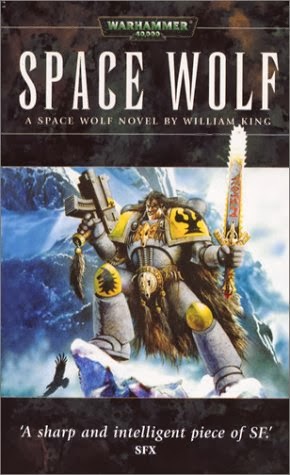
Two, this is NOT the Space Wolves we know and love. Sure they hang out with wolves (the four-legged kind); sure they chill on Fenris in The Fang like some $wagged out bosses; sure they wear grey armour and have a load of runes and talismans all up on their shoulderpads. But they're also extremely downbeat, laconic and, well, not the ale-swilling alpha males you'd expect. I'll admit, I could get no more than a few chapters into the Bill King 'Space Wolf' books which (to me) read like a shitty Japanese RPG about half-understood super-Vikings (lots of mead, references to sagas, characters earnestly pledging to meet again in Valhalla and shit like that). But none of that here. Just lots of phlegmatic, darkly humourous conversations and desperately violent, short battles. In probably the most controversial scene here, they even openly dismiss the name 'Space Wolves' - and you can see why. These are Serious Dudes, and that name is, well, faintly ridiculous. Obviously, this is the highest Heresy EVER to angry "current-40K" nerds who are all Team Jacob and shit. The implication that perhaps 10,000 years go, their legion of boisterous space barbarians were a little different from the WH40K status quo... motherfuckers damn near took contracts out on Abnett's life. And Lemam Russ turning up, but not eviscerating ANYONE or even roaring at anything? And, perhaps (as 'A Thousand Sons' hinted so well) being a thoughtful, well-balanced guy capable of civilised conversation and bearing no apparent malice towards the Crimson King, but who feels he has to play the role of a brash warlord to be a more effective/fearsome leader? Don't. Get. Me. Fucking. Started. Abnett. You. Monster.
Space Wolves in a happier, simpler time.
So, this is less like the romanticised vision of Space Vikings we have previously seen in fiction about the 6th Legion, and more like the people of Fenris probably would be. I mean, their world isn't just hostile, it's seemingly designed specifically to stamp out any human life on it. The tribes live in constant war and even if they continuously win, their prize is to live out a pretty joyless, awful existence. This makes the survivors a group of people who were killers through necessity, and good at it, but didn't particularly relish life and realised it could be taken away, horribly, at any time.

I am fucking sick, by this point, of moments in Horus Heresy books where the author says "All the legions were designed to deal death, but (insert name of Legion this book is about) were... like, really, really fucking good at it, y'know. They were all about killing. Not like those pussy-ass other 17." But... fuck. You know if Abnett pulled that shit, he was gonna back it up by taking it to some OTHER LEVEL of violence. The battle scenes in THIS are, well, brutal. I read this before I read 'A Thousand Sons', and by the end, I was going "Shit, man, if I was Magnus and the Emperor sicced these dogs on ME, I'd be pounding on Tzeentch's door before they even made planetfall, begging him to take my soul so he could super-Saiyan me the fuck up." And the Thousand Sons are my dudes, they like reading, daydreaming, listening to the Smiths and burning people alive with their minds... but the Rout win this one, bruh. It was never even a contest. Forget McNeill's Stalinist revisionism where the Sons lost just because of the flesh-change. Team Fenris got in the mud on Prospero. They might not be marching into battle singing 'Immigrant Song' but they still reach out & touch their enemies real good.
The goofy over-the-top 'space vikings' thing isn't all bad. This cover is pretty damn cool.
Oh yeah, another reason this SUCKS and Abnett should DIE: The main character isn't even a Space Wolf! See, Kasper Hawser AKA Ahmad Ibn Rusta AKA as Trashbat is this wussy academic type who gets seconded to the Wolves due to, erm, almost dying on Fenris, and learns some shit about their ways and traditions and what have you. It's interesting because - to my knowledge - there hadn't really been a HH book before this solely from the viewpoint of an outsider/non-combatant - for the sake of argument let's call him a Remembrancer. We've had some characters of that nature, but we've never stayed in their perspective for a whole book. Don't worry, there's still loads of killing... but there are also some super-homo bits where he thinks back to his life as a 31st milennium archaeologist-type and the debates he had with colleagues on the nature of the Crusade and Man's role in the universe. DON'T YOU HATE IT WHEN AUTHORS GIVE MORE DIMENSION TO THE WH40K UNIVERSE THAT'S NOT CHAINSWORDS SLICING OPEN BOLTGUNS? If so you probably shouldn't be reading a Dan Abnett book... even a Heresy one.

Oh, the other reason this book pisses people off: Abnett references, many times, the wolves making a deep "wet leopard-growl" in their throats. I did see one dude sneering in his review "What this is I don't know; presumably the sound a leopard would make when it's wet." No brah, that would be a "wet-leopard growl". Check ya hyphenation son... you Gore Vidal-ass motherfucker. But I digress. As soon as I read this, I instantly 'felt' where Dan was comin' from. The wolves are so animalistic, don't you agree? And it's just a deep, gurgling, primal sound like a large cat would make. I do agree, though, that he overuses that particular phrase, by about 10 instances. But you know what? That's the ONE FLAW I feel this book has.
This would explain a lot (attribution)
If you loved 'Ravenor', or 'Eisenhorn', you will probably love Prospero Burns. It's colossal, history shaping events seen by a non-warlike, but intelligent, character who is often struggling to comprehend what he sees. In other words, he's us. See what I mean? Not necessarily a great Horus Heresy series book, but a superb WH40K book and a great dark sci-fi book full stop. 'Prospero Burns', I now reiterate, is probably my favourite Dan Abnett book so far and it's a masterpiece of 40K fiction. I give it an unreserved 10/10.

New to PurpleHeresy? Head on over to the index page to see a more chronological list of the Horus Heresy reviews on this blog.